


Water Heater Emergency? What to Do Before the Plumber Arrives
Water spreading across the basement floor, a hiss from the utility closet, or a shower that suddenly runs ice cold. When a water heater fails, the first ten minutes matter more than anything else. Here's what to do, what to leave alone, and what happens once your plumber gets there.
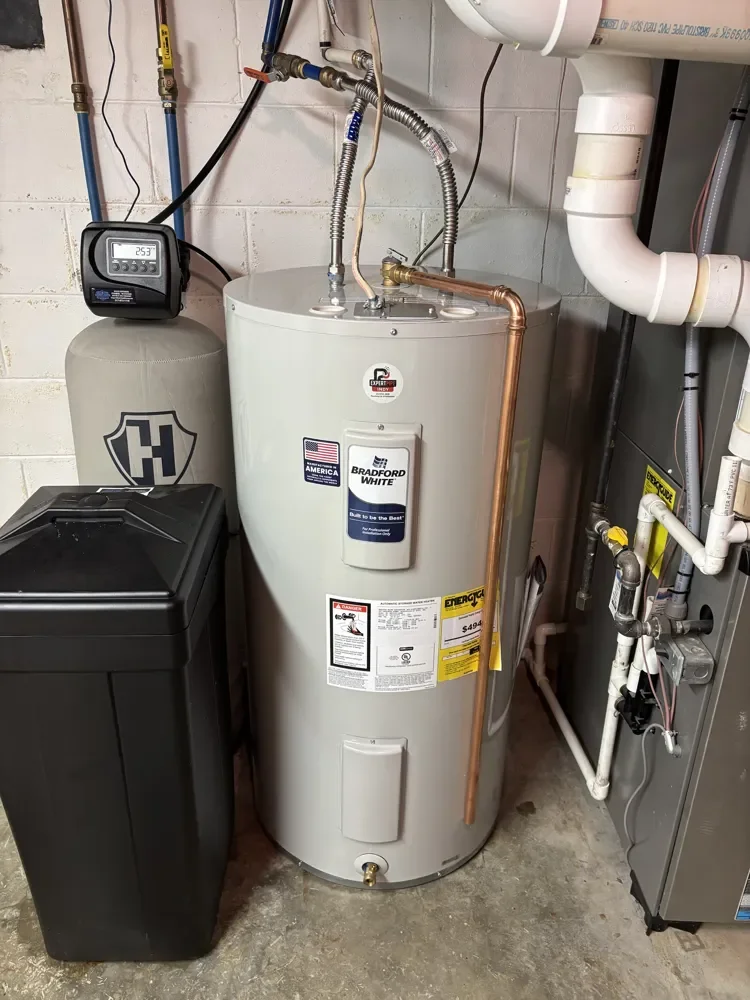
Is it really an emergency?
Some water heater problems can wait for a normal appointment. These can't:
Water leaking from the tank itself or pooling around the base
A gas smell anywhere near the heater
A burning or electrical smell, or a breaker that keeps tripping
Water spraying or steaming from the relief valve or its discharge pipe
No hot water at all in the middle of an Indiana winter, especially with kids or older family members at home
A small drip from a fitting or a heater that's a little lukewarm is worth a call, but it usually isn't a drop-everything situation.
If you smell gas, start here
Don't try to find the leak. Don't flip light switches, use the garage door opener or start a car in the garage. Get everyone out of the house, then call your gas utility or 911 from outside. Once the utility has made it safe, we can repair the heater or gas line.
What to do right now for a leak or failure
1. Shut off the water
Find the cold water line running into the top of the heater. It should have a shutoff valve. Turn a round handle clockwise until it stops, or turn a lever handle so it sits crosswise to the pipe. If you can't find it or it won't turn, shut off the main water valve for the house. In most Central Indiana homes it's in the basement, crawlspace or utility room where the water line comes through the wall or floor.
2. Shut off the power or gas
Electric heater: switch off the water heater breaker at your electrical panel.
Gas heater: turn the control knob on the gas valve to OFF or PILOT, and close the gas shutoff valve on the supply line if you can reach it safely.
Only do this if you can get to it without standing in water near electrical parts.
3. Protect your stuff
Move boxes, rugs and anything stored nearby. Use towels or a wet vac to keep water from reaching finished areas. If you have a floor drain, clear the path to it. Take a few photos for your insurance company.
4. Call or text us
Calling is best when water is actively leaking, so we can walk you through the shutoff while help is on the way. A photo of the heater's label is also a big help. It tells us the brand, age and size before we arrive.
What not to do
Don't open the burner or electrical access panels.
Don't try to drain a leaking tank unless a plumber tells you it's safe. The water can be scalding.
Don't turn the temperature up to make up for lukewarm water.
Don't wait out a slow leak. Tanks rarely heal, and small leaks tend to get bigger.
Repair or replace?
Not every emergency means a new water heater. If the tank is sound and a part has failed, like a gas valve, thermocouple, heating element or thermostat, a repair is often the right call, and that's what we'll recommend.
If the tank itself is leaking, it can't be patched. Rust through the steel shell means replacement. When that's the case, we'll explain why and give you your options. Same-day replacement is often available, and we install Bradford White tank heaters and Navien tankless units, handle the permit and haul the old one away. Right now you can also get $50 off any tank water heater installation or $500 off a tankless installation.
Why they fail "out of nowhere"
Most sudden failures have been building for years. Hard water leaves sediment in the bottom of the tank, the anode rod wears out, and the steel starts to corrode. Then winter hits. Incoming water gets much colder, the heater runs longer, and a tired unit finally gives out. That's why water heater calls climb every winter in Hamilton County.
If your heater is getting older, a yearly flush and a quick check of the anode rod and relief valve can help you plan a replacement on your schedule instead of in the middle of a cold snap.
When to call us
If you're dealing with any of the problems above, reach out to our emergency plumbing line. Texts to (317) 731-3028 are answered 24/7. For non-urgent questions, our water heater repair and replacement page covers what we do.
FAQ
Can I still use water in the house after I shut off the heater?
If you only closed the valve on the heater's cold line, yes. Your cold water will still work everywhere. If you had to shut off the main, you won't have water until the heater is isolated or repaired.
My relief valve is dripping. Is that an emergency?
A steady drip or spray from the temperature and pressure relief valve means the tank is overheating, pressure is too high, or the valve is failing. Turn off the power or gas and call. Don't cap or plug the valve.
Can a leaking water heater wait until morning?
If you've shut off the water and power or gas and the leak has stopped, it can often wait for a morning visit. If water is still coming out, or it's a gas smell, don't wait.
Will insurance cover the water damage?
Many homeowner policies cover sudden water damage from a failed heater, but usually not the heater itself. Photos and prompt action help your claim. Check with your insurance agent for the details of your policy.
How fast can you replace a water heater?
Same-day replacement is often available. Your plumber will confirm the right size and fuel type, give you options and a price on site, and get started once you approve.
Water heater trouble right now? Call or text (317) 731-3028, or visit our emergency plumber page.

Winter Water Heater Maintenance for Indiana Homes
Your water heater has its hardest months from December through February. The water coming in from the street or your well is much colder, everyone takes longer showers, and a tank that coasted through summer suddenly has to work nonstop. A little prep in the fall keeps it from quitting on the coldest morning of the year.
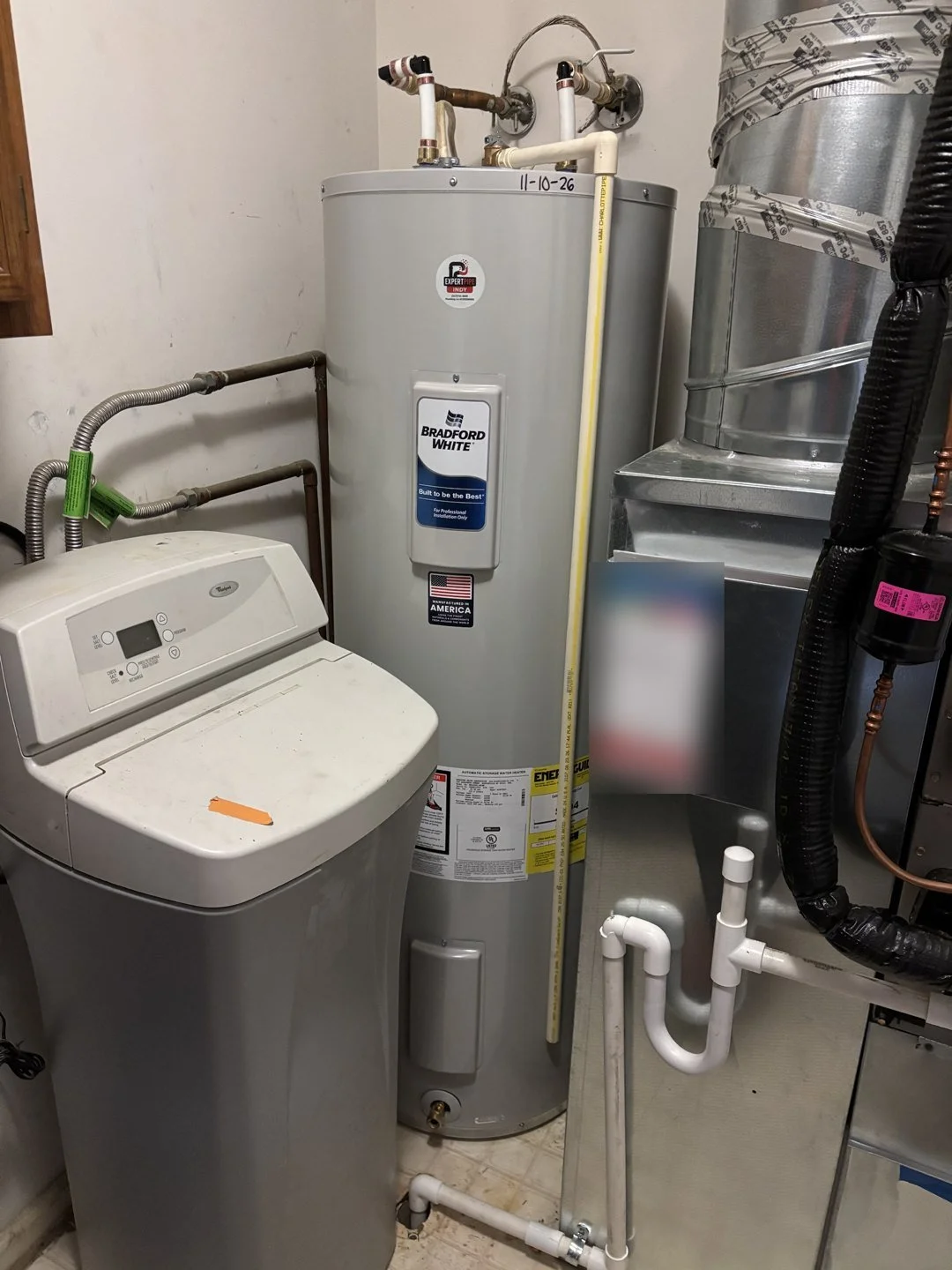
Why winter is tough on water heaters here
In a Central Indiana winter, the water entering your home can be dramatically colder than it is in August. Your heater has to raise that water much further to reach the same temperature, so it runs longer and cycles more often. Add holiday guests, extra laundry and long hot showers, and any weak part gets exposed fast.
Hard water makes it worse. Across Hamilton and Boone County, minerals settle in the bottom of tank heaters all year. By winter that sediment layer can be thick enough to slow heating, cause popping or rumbling, and put extra stress on the tank.
Your fall water heater checklist
October and early November are the best time to work through this list, before the first hard freeze.
Flush the tank
A yearly flush clears out sediment so the burner or elements heat water instead of minerals. If you've never flushed yours and it's more than a few years old, have a plumber do the first one. Old sediment can clog the drain valve, and older valves sometimes don't close fully afterward.
Test the relief valve
Put a bucket under the discharge pipe and lift the lever on the temperature and pressure relief valve for a few seconds. Water should flow and then stop cleanly when you let go. If nothing comes out, or it keeps dripping, the valve needs to be replaced.
Look for leaks and rust
Check the fittings on top of the tank, the base of the heater and the drain valve. Rust streaks, damp spots or white crust are early warning signs worth getting looked at.
Set the temperature
Around 120°F works well for most homes. It gives plenty of hot water in winter without extra energy use or scald risk. Resist the urge to crank it higher when the water feels lukewarm. That usually points to sediment or a failing part, not the setting.
Insulate where it's cold
If your heater sits in an unfinished basement or garage, insulating the first several feet of hot and cold pipe helps. On older electric tanks, an insulation blanket can reduce heat loss. On gas heaters, keep insulation away from the top, the burner area and the vent.
Gas heaters: check the vent and the air
Gas water heaters need to breathe and exhaust properly. Before winter:
Make sure boxes, laundry and holiday decorations aren't stacked around the heater.
Check that the vent pipe is connected and not sagging or rusted through.
If you have a power-vent or direct-vent unit with a wall termination outside, keep snow, leaves and ice clear of it.
Look at the burner flame through the window if there is one. It should be mostly blue.
A yellow, flickering flame or soot around the burner means the heater needs service. If you ever smell gas, leave the house and call your gas utility or 911 from outside.
Electric heaters: watch recovery time
Electric heaters slow down in winter because cold water takes longer to heat. Scale on the elements makes them slower still. If hot water is running out faster than it used to, or one of the elements has burned out, it's worth a check before demand peaks.
Don't forget tankless
Tankless heaters don't collect sediment in a tank, but hard water still leaves scale in the heat exchanger. Descaling on the manufacturer's schedule keeps flow and temperature steady. Clean the inlet filter screen at the same time, and keep outdoor vent terminations clear of snow.
Is this the year to replace it?
If your tank heater is near the end of its life, leaking, or already struggling to keep up, replacing it in the fall beats replacing it during a January cold snap. You get time to choose the right size and fuel type instead of taking whatever fits in a hurry.
We install Bradford White tanks and Navien tankless heaters, handle the permit and haul away the old unit. Right now you can take $50 off a tank installation or $500 off a tankless installation.
When to call us
If you'd rather not flush the tank yourself, or you found something on the checklist that concerns you, we can take care of it. See our water heater service page for more. If hard water is behind your sediment problem, ask about water softeners too. Your plumber gives you options and a price before any work starts.
FAQ
How often should I flush my water heater in Indiana?
At least once a year. Homes with very hard water and no softener, or big households that use a lot of hot water, may benefit from flushing more often.
Why does my water heater run out of hot water faster in winter?
Colder incoming water takes longer to heat, and sediment or a worn element reduces how much hot water the tank can deliver. If the drop is sudden, a burned-out element or failing gas part is a likely cause.
Should I turn my water heater up in winter?
Usually not. About 120°F is enough for most homes. If that no longer feels hot, the heater likely needs a flush or repair rather than a higher setting.
Can a water heater freeze?
A heater that's running rarely freezes, but the pipes feeding it can if they run through an unheated garage or crawlspace. Insulate those lines, and if you'll be away, keep the heater on vacation mode instead of turning it off.
Does a tankless heater need winter maintenance?
Yes. Hard water scale builds in the heat exchanger, so regular descaling matters. Also keep outdoor vents clear of snow and ice.
Get your water heater ready before the cold sets in. Call or text (317) 731-3028, or visit our water heater page.

Gas vs Electric Water Heaters: Which Fits Your Indiana Home?
When it's time for a new water heater, the first question is usually gas or electric. In most cases the answer is whatever your home already has, but not always. Here's how the two compare in real Central Indiana homes and when switching makes sense.
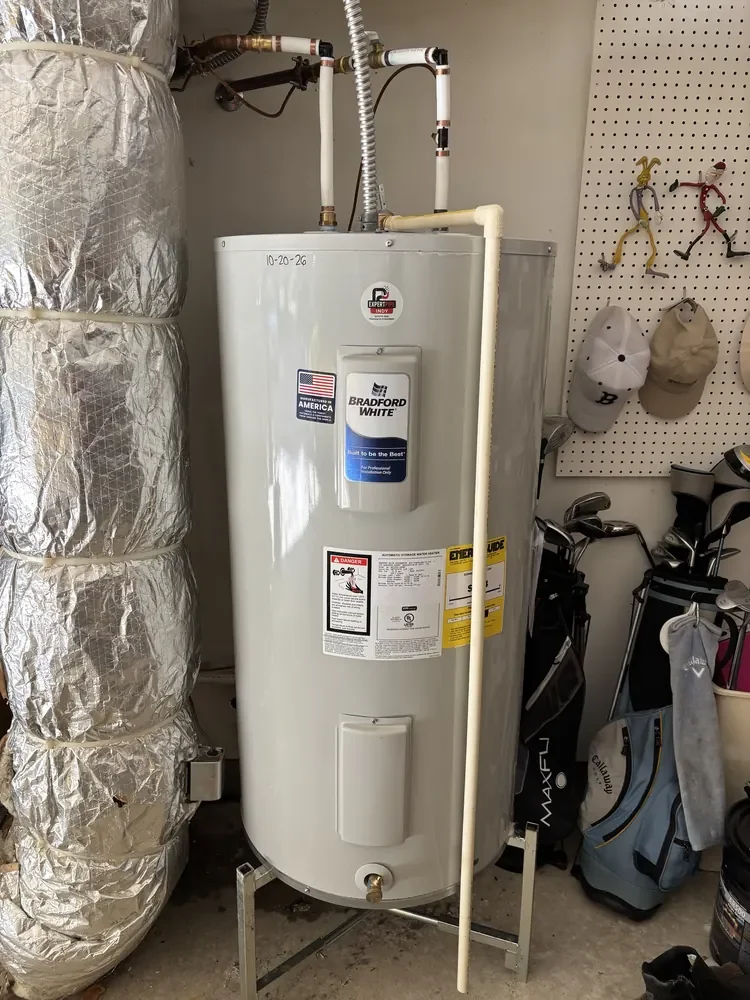
How each one works
Gas water heaters
A burner under the tank heats the water, and a vent carries exhaust outside. A gas heater needs a gas line, a properly sized vent and enough fresh air around it to burn cleanly. Most homes in Carmel, Fishers and Westfield with natural gas service have a gas water heater in the basement or utility room.
Electric water heaters
Two heating elements inside the tank do the work. There's no flame and no vent, just a dedicated circuit from your electrical panel. You'll find these in condos, homes without gas service and many rural properties on well and septic.
How they compare day to day
Recovery time
Recovery is how fast the heater refills with hot water after you use it. Gas heaters recover much faster. If your household runs back-to-back showers in the morning while the dishwasher is going, gas keeps up more easily. An electric tank of the same size will run out sooner under heavy use.
Operating cost
In most Indiana homes with access to natural gas, gas costs less to run over the life of the heater. Electric heaters are very efficient at turning power into heat, but electricity usually costs more for the same amount of heat. Heat pump electric water heaters close much of that gap, though they have their own space and airflow needs.
Power outages
A standard atmospheric-vent gas heater can often keep making hot water when the power's out, since the gas valve doesn't depend on household electricity. Power-vent gas models and all electric models stop until power returns. That's worth thinking about if your neighborhood loses power during ice storms.
Upkeep and lifespan
Both types need a yearly flush in our hard water, a relief valve check and an eye on the anode rod. Gas heaters add a burner and vent to keep clean and safe. Electric heaters have fewer parts but can burn out elements, especially when scale builds up. With good care, either one can give you many years of service.
Should you switch?
Switching fuels is possible, but it adds work.
Electric to gas usually means running a gas line to the heater and installing a vent that meets code.
Gas to electric may need a new dedicated circuit, and sometimes more panel capacity.
It can make sense if you're finishing a basement, adding a bathroom or planning to stay in the home a long time. If your current setup works well, replacing like for like is usually the simplest choice.
What about tankless?
If you have natural gas and a larger household, a gas tankless heater is worth a look. It heats water on demand, so you don't run out during back-to-back showers, and it frees up floor space. It does need the right gas line size and venting, plus regular descaling in hard water. We install Navien tankless units, and right now you can take $500 off any tankless water heater installation.
What affects your choice
When your plumber comes out, they'll look at a few things before recommending a heater:
What fuel your home already has and where it's located
The condition of the existing vent or electrical circuit
How many people live in the home and how they use hot water
Available space and access to the install location
Local code requirements, like expansion tanks and drain pans
You'll get options for gas, electric or tankless when they fit your home, with a price for each before any work starts.
When to call us
We install Bradford White gas and electric tank heaters, often same day, and we handle the permit and haul-away of your old unit. Right now you can take $50 off any tank water heater installation. Visit our water heater repair and replacement page to learn more, or call and we'll talk through what fits your home.
FAQ
Is gas or electric cheaper to run in Indiana?
For most homes with natural gas available, gas is cheaper to operate. Homes on propane or with heat pump electric heaters can see a different picture, so it depends on your fuel and equipment.
Which lasts longer, gas or electric?
Electric tanks often last a bit longer because they have no burner or combustion exhaust. In hard water, maintenance matters more than fuel type. A flushed tank with a good anode rod outlasts a neglected one of either kind.
Can I go up a size when I replace my water heater?
Usually, yes, as long as there's room and the gas line, venting or electrical circuit can support it. Your plumber will check before recommending a bigger tank.
Is a gas water heater safe?
Yes, when it's installed and vented correctly. Keep the area around it clear, have the vent checked, and consider a carbon monoxide detector nearby. If you ever smell gas, leave the house and call your gas utility or 911.
Do I need a permit to replace a water heater?
In most of our service area, yes. We handle the permit as part of the installation.
Not sure which water heater is right for you? Call or text (317) 731-3028, or see our water heater installation options.

Why Your Water Heater Smells Like Rotten Eggs and How to Fix It
You turn on the hot water and the bathroom fills with a smell like rotten eggs. It's unpleasant, but it's also one of the more fixable water heater problems. In most homes the cause is a reaction inside the tank, and it can be cleared up without replacing anything major.
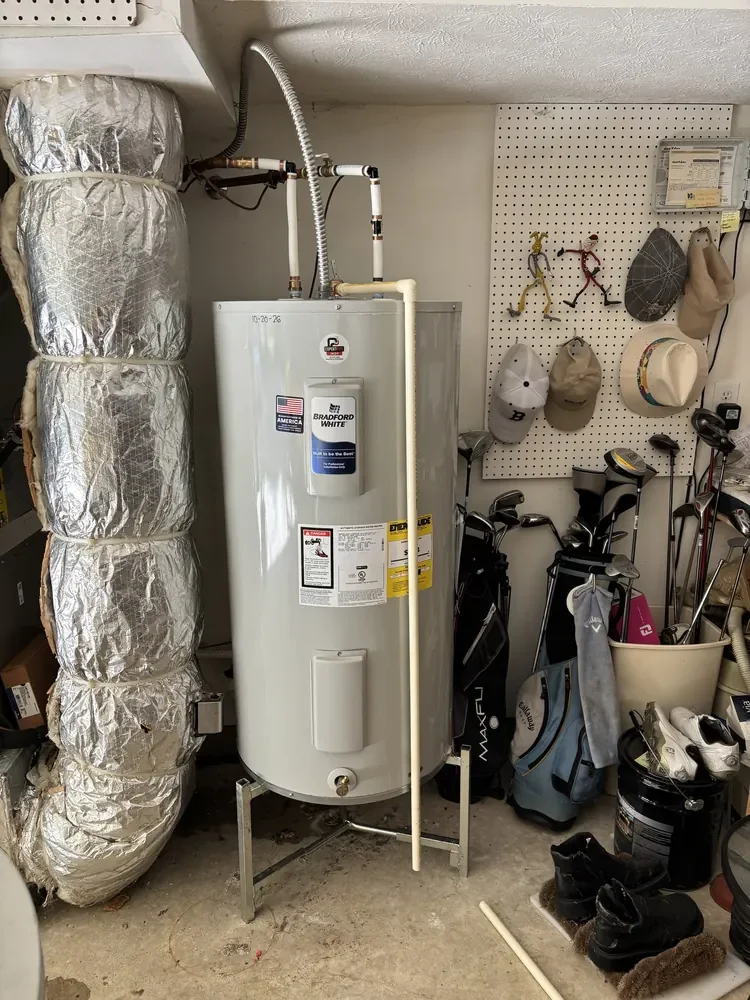
What causes the smell
That odor is hydrogen sulfide gas. In a water heater, it usually comes from harmless sulfate-reducing bacteria reacting with the tank's anode rod. The anode rod is a metal rod, usually magnesium or aluminum, that corrodes on purpose so your steel tank doesn't. When those bacteria meet a magnesium rod in warm water, they produce hydrogen sulfide, and you smell it at the tap.
A few things make it more likely:
Well water, which is common in the outlying parts of Hamilton, Boone and Hendricks County and more likely to carry sulfates and bacteria
A water softener, which can speed up the reaction with a magnesium rod
Water that sits unused, like in a vacation home or a guest bath that rarely runs
A low temperature setting that lets bacteria thrive
Heater or water supply? A quick test
Run cold water at a sink for a minute and smell it. Then run hot water at the same sink.
Only the hot water smells: the problem is inside your water heater.
Hot and cold both smell: the sulfur is coming from your water source, most often a well. The water heater may be making it worse, but it isn't the root cause.
If you're on city water and both taps smell, call your water provider. If you're on a well, a water test will show what you're dealing with.
How to fix it
Swap the anode rod
This is the fix that works in most homes. Replacing a magnesium rod with an aluminum-zinc rod cuts down the reaction that creates the gas. Another option is a powered anode, which protects the tank with a small electrical current instead of a metal rod that wears away. Powered anodes are a good choice for well homes with stubborn odor problems.
Anode rods are tightened in hard and sit under the top of the tank, so it helps to have clearance above the heater and the right tools. Don't just pull the rod out and leave it out. The smell goes away, but the tank loses its corrosion protection and can rust through much sooner. It can also affect the manufacturer's warranty.
Flush and disinfect the tank
If bacteria have built up, the tank should be flushed and sanitized. That usually means shutting off power or gas, draining the tank, adding a hydrogen peroxide solution, letting it sit, then flushing and refilling. Follow the heater manufacturer's instructions or have a plumber do it, since the tank and water can be very hot and the power or gas has to be handled safely.
Check the temperature
Settings well below 120°F give bacteria an easier time. Keeping the heater around 120°F is a good balance for comfort, energy use and scald safety.
Treat the water if you have a well
If both hot and cold smell, treating the water where it enters the house is the long-term fix. Depending on your test, that could be filtration, an aeration or oxidizing system, or well disinfection.
When replacement makes more sense
If the heater is old, already showing rust or leaks, or the smell keeps coming back after a new rod and a proper cleaning, replacing the heater may be the better value. We'll explain why if that's the case. We install Bradford White tank heaters and Navien tankless units, and right now you can take $50 off a tank installation or $500 off a tankless installation.
When to call us
If you'd like the anode rod swapped and the tank sanitized in one visit, give us a call. We'll figure out whether the smell is coming from the heater or the water supply and give you options and a price before any work starts. Learn more about our water heater repair service, or our water filtration options for well homes.
FAQ
Is the rotten egg smell dangerous?
At the low levels found in hot water, it's usually a nuisance rather than a health risk. It can tarnish fixtures and silverware over time. If you smell rotten eggs near a gas appliance rather than at the tap, treat it as a possible gas leak: leave the house and call your gas utility or 911.
Why did the smell start after I got a water softener?
Softened water can make a magnesium anode rod react faster, which produces more hydrogen sulfide. Switching to an aluminum-zinc or powered anode usually solves it while keeping the benefits of soft water.
How quickly does the smell go away after the fix?
Once the rod is replaced and the tank is flushed, the smell typically fades within a day or two as fresh water cycles through.
Can the smell come back?
It can if the water chemistry stays the same and the heater still has a magnesium rod, or if water sits unused for long periods. A yearly flush and the right anode rod keep it from returning.
Should I just remove the anode rod?
No. Without an anode, the steel tank corrodes much faster and can start leaking years early. Replace it with a rod designed to reduce odor instead.
Tired of smelly hot water? Call or text (317) 731-3028, or visit our water heater service page.

Yearly Water Heater Maintenance Checklist for Carmel Homes
A water heater doesn't ask for much, but it does need a little attention once a year, especially with Carmel's hard water. This checklist covers what to look at, what you can handle yourself and what's better left to a licensed plumber. Pick a date you'll remember, like the weekend you change your smoke detector batteries, and make it a habit.
Before you start
Find your heater's label and note the brand, size and manufacture date. The date is often coded into the serial number.
Know where the cold water shutoff valve is on the line going into the heater.
For gas heaters, know where the gas shutoff is. For electric, know which breaker controls the heater.
Have a garden hose, a bucket and a flashlight handy.
The yearly checklist
1. Flush out sediment
Carmel's hard water leaves calcium and magnesium in the bottom of the tank. Flushing it out keeps the heater efficient and quieter.
Turn the gas control to PILOT or OFF, or switch off the breaker for an electric heater.
Connect a hose to the drain valve at the bottom of the tank and run it to a floor drain or outside.
Open a hot water faucet somewhere in the house, then open the drain valve.
Let it run until the water comes out clear. Opening the cold supply briefly can stir up more sediment.
Close the drain valve, refill the tank until water flows steadily from the open hot faucet, then restore gas or power.
Never turn an electric heater back on before the tank is full, or the elements can burn out. If your heater is several years old and has never been flushed, let a plumber do the first one. Old plastic drain valves can clog or fail to close.
2. Test the temperature and pressure relief valve
This valve is the heater's most important safety device. Place a bucket under the discharge pipe, lift the lever for a few seconds, and let it snap back. Water should flow and then stop completely. If it won't open, won't close or keeps dripping, have it replaced right away.
3. Check the anode rod
The anode rod corrodes so the steel tank doesn't. In hard water it can wear out faster than you'd expect. Checking it every few years, and replacing it when much of the core wire is exposed, is one of the best ways to help a tank reach its full life. Removing it takes the right tools and clearance above the heater, so many homeowners leave this step to us.
4. Check the expansion tank
Most homes with a closed plumbing system need a thermal expansion tank on the cold line near the heater. Tap it. The top half should sound hollow. If it sounds full, or water comes out when you press the air valve on the end, the bladder has failed and the tank needs replacing.
5. Check your water pressure
A simple pressure gauge that threads onto a hose bib tells you your home's water pressure. Plumbing code caps household pressure at 80 psi, and many homes do best somewhat below that. If yours is high, a pressure-reducing valve may need to be adjusted or replaced. High pressure is hard on the water heater and every fixture in the house.
6. Inspect for leaks and rust
Look at the hot and cold connections on top, the relief valve, the drain valve and the floor around the base. Rust streaks, white crust or damp spots are early warnings. If your heater sits over a finished area, a drain pan and a water leak alarm are cheap insurance.
7. Look at the burner or elements
On a gas heater, the flame should be mostly blue and steady. Yellow flames, soot or a scorched area near the burner mean it's time for service. Keep the area around the heater clear of storage, and check that the vent pipe is secure. On an electric heater, lukewarm water or hot water that runs out fast often points to a failed element or thermostat.
8. Confirm the temperature setting
About 120°F is right for most homes. It's hot enough for daily use and helps limit scald risk, energy use and scale buildup.
What to leave to a plumber
Anything involving gas connections, burners or venting
Replacing relief valves, anode rods, elements or thermostats
Drain valves that won't close or tanks that won't drain
Any active leak from the tank itself
When to call us
If you'd rather have a pro go through this list, or something on it didn't check out, we can help. We'll recommend a repair when that's the right move and explain clearly if replacement is the better value. See our water heater repair and replacement page, or our Carmel plumbing page for more on the area we serve.
FAQ
How often should I flush my water heater in Carmel?
At least once a year. Without a water softener, or with a large household, flushing more often can help keep sediment from building up.
Can I do this maintenance myself?
Flushing, relief valve testing, checking pressure and setting the temperature are all reasonable for a handy homeowner. Anode rod replacement, gas work and part replacements are better handled by a licensed plumber.
How long does professional maintenance take?
For most tank heaters it's a fairly short visit. Heavy sediment, a stuck drain valve or an anode rod replacement can add time. Your plumber will give you options and a price before starting.
Does a tankless water heater need yearly maintenance?
Yes. In hard water, tankless heaters should be descaled on the manufacturer's schedule, and the inlet filter screen should be cleaned. That keeps flow and temperature steady.
How do I know when it's time to replace instead of maintain?
Rust in the hot water, a leak from the tank itself, or repeated repairs on an older unit are strong signs. We'll show you what we found and explain why replacement makes sense before recommending it.
Want help with your yearly water heater check? Call or text (317) 731-3028, or request service online.

Why Is My Water Heater Making Rusty or Brown Water?
Brown or rust-colored water coming out of the tap is alarming, especially in the tub or a white sink. Sometimes it's a short-lived hiccup from the city's water mains. Other times it's a sign your water heater is corroding from the inside. A couple of simple checks will tell you which one you're dealing with.
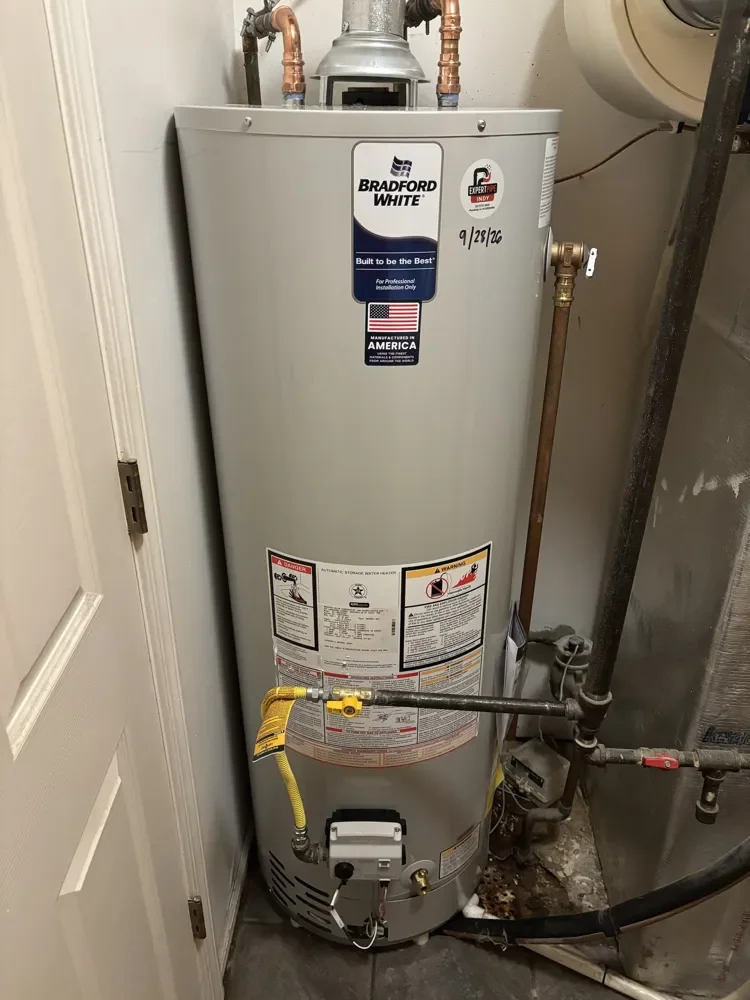
First, figure out where it's coming from
Run the cold water at a faucet for a minute or two, then switch to hot at the same faucet.
Only the hot water is brown: the source is almost certainly your water heater.
Hot and cold are both brown: the problem is in your pipes or the water supply, not the heater.
It happens at one fixture only: look at that fixture's supply lines or valve.
If both taps are brown and your neighbors are seeing the same thing, it's likely a water main issue. Hydrant flushing or a main break can stir up sediment. Run the cold water at your lowest faucet for several minutes and it should clear up. Avoid running hot water or doing laundry until it does, so you don't pull that sediment into your water heater or onto your clothes.
Why a water heater makes rusty water
The anode rod is used up
Every tank heater has an anode rod that corrodes on purpose so the steel tank doesn't. Hard water, like most of Hamilton County has, can wear it out faster. Once the rod is gone, the tank starts rusting instead, and that rust shows up in your hot water.
The tank itself is corroding
The inside of a steel tank is lined with a glass coating. Over time, small cracks in that lining expose bare steel. If the anode rod isn't protecting it, rust forms and flakes off into the water. The discoloration usually starts gradually and gets worse over weeks or months.
Sediment has built up
Mineral sediment mixed with rust can collect in the bottom of the tank. Stirred up by heavy hot water use, it can cloud or tint the water even before the tank is badly corroded.
When it's your pipes
If both hot and cold are discolored and the city isn't working on the mains, look at your plumbing. Many older homes in North Indianapolis, and some older homes around Carmel and Broad Ripple, still have galvanized steel water lines. Galvanized pipe rusts from the inside, and the rust breaks loose as brown water, low pressure or both. Well homes can also see orange or brown water from iron in the well water itself.
For galvanized lines, the long-term fix is replacing them with copper or PEX. For iron in well water, the answer is usually filtration.
How to fix rusty water from the heater
Flush the tank
Draining and flushing the tank clears out sediment and loose rust. If the water runs clear afterward and stays that way, the tank may still have good life left.
Replace the anode rod
If the tank lining is still mostly intact, a new anode rod can take back over the job of corroding and slow the rusting. This works best when caught early on a heater that isn't very old.
Replace the heater
If the rust comes back quickly after a flush, the tank is leaking, or the unit is near the end of its life, replacement is the lasting fix. A corroded tank can't be relined or patched. If that's where things stand, we'll show you what we found and explain why. We install Bradford White tank and Navien tankless heaters, handle the permit and haul away the old unit, and same-day replacement is often available. Right now you can take $50 off a tank installation or $500 off a tankless installation.
Keeping it from happening again
Flush your tank heater once a year.
Have the anode rod checked every few years, more often with hard water.
Keep the temperature around 120°F. Hotter water speeds up corrosion.
Make sure your water pressure isn't too high and your expansion tank is working.
Consider a water softener to reduce mineral buildup in the tank and pipes.
When to call us
If hot water keeps coming out brown, or both hot and cold stay discolored after the city work is done, give us a call. We'll figure out whether it's the heater, the pipes or the water itself, then give you options and a price before any work starts. Learn more about water heater repair and replacement or whole-home repiping for older galvanized lines.
FAQ
Is rusty water safe to drink?
Small amounts of rust aren't considered a serious health risk, but it's not pleasant and can carry sediment. Use cold water that runs clear for drinking and cooking until the cause is found and fixed.
Can flushing the water heater fix brown water?
Sometimes. If sediment is the main problem, a flush can clear it up. If the water turns brown again within days, the tank is likely corroding and a new anode rod or a replacement heater is the better answer.
Will rusty water stain my laundry?
It can. Hold off on laundry until the water runs clear. If clothes do get stained, don't put them in the dryer, since heat can set rust stains.
Why is my hot water brown only after I've been away?
Water sitting in the tank gives rust and sediment time to settle and concentrate. Running the hot water for a few minutes may clear it. If it happens often, have the anode rod and tank checked.
Can a rusty water heater tank be repaired?
Parts like the anode rod, drain valve and relief valve can be replaced, but a tank that's rusting through can't be relined or patched. At that point, replacement is the safe choice.
Seeing brown water from your taps? Call or text (317) 731-3028, or visit our water heater service page.

Water Heater Pilot Light Keeps Going Out? Causes and Safe Fixes
You relight the pilot, get a hot shower, and two days later the water is cold again. A pilot that keeps going out is one of the most common gas water heater calls we get around Carmel, Westfield and North Indianapolis. The cause is usually a small, fixable part, but it is also your water heater telling you something needs attention.
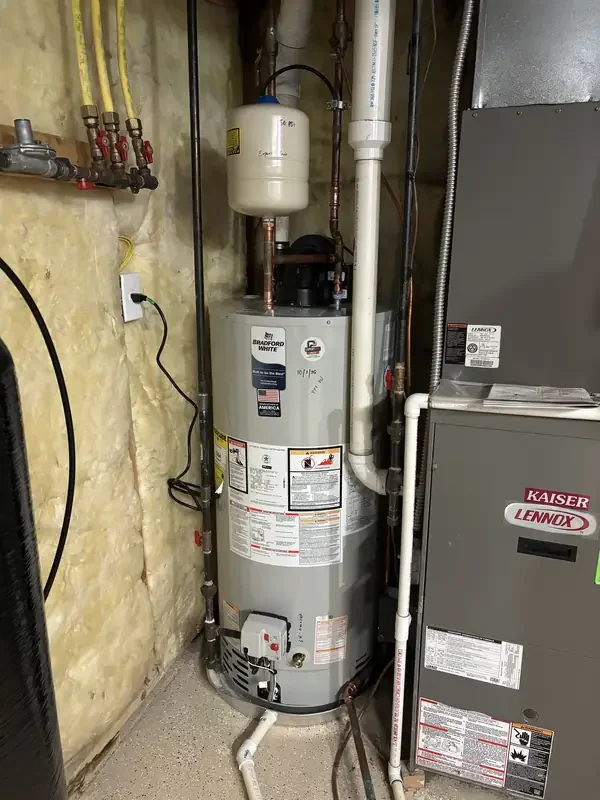
Here is what is going on inside that burner compartment, how to relight it safely, and when to hand it off to a plumber.
How the pilot and burner work together
On a standard gas tank, a small pilot flame burns all the time. When the water cools below your thermostat setting, the gas valve opens and the pilot lights the main burner. Three parts keep that system running:
Thermocouple or flame sensor: a small metal probe that sits in the pilot flame and tells the gas valve a flame is present.
Gas control valve: the box with the knob on the front. It controls gas to the pilot and burner.
Pilot assembly: the tube and tiny orifice that feed and shape the pilot flame.
If any one of these gets dirty, worn or knocked out of position, the valve shuts the gas off as a safety measure and the pilot goes dark.
Common reasons the pilot won't stay lit
A worn or dirty thermocouple
This is the usual suspect. Over time the tip gets coated or weak and stops sending a strong enough signal, so the valve closes even though the flame looked fine. We test its output with a meter before replacing it, so you are not paying for a part you did not need.
A clogged pilot orifice
Dust, lint and rust flakes can partly block the pilot opening. The flame turns small, yellow or lazy and does not wrap the thermocouple well. Basements and utility rooms with laundry nearby are prone to this, since dryer lint gets pulled toward the burner air intake.
Drafts and venting problems
A water heater near a garage door, open window or return air vent can have its pilot blown out on windy days. A vent pipe that is loose, poorly sloped or partly blocked can also pull the flame sideways or push exhaust back down. Our Indiana winters make this worse, since cold outside air and a tight house can change how the vent drafts.
A failing gas control valve
Less common, but it happens, especially on older units. If the thermocouple tests good and the pilot still drops out, the valve itself may not be holding open. Gas valve work should always be done by a licensed plumber.
Moisture in the burner area
Water dripping from a fitting above, condensation, or a tank that has started to leak can rust the burner and splash the pilot. If the moisture is coming from the tank itself, that points toward replacement rather than repair.
How to relight the pilot safely
If you smell gas, stop. Do not light anything or flip switches. Leave the house and call your gas utility or 911 from outside.
If there is no gas smell, follow the instructions on the label on your tank. On most standing-pilot models the steps look like this:
Turn the control knob to OFF and wait at least 5 to 10 minutes for any gas to clear.
Turn the knob to PILOT and press it down.
While holding it, press the igniter button (or use a long lighter) until the pilot lights.
Keep holding the knob for about 30 to 60 seconds so the thermocouple heats up, then release.
Turn the knob to ON and listen for the main burner to light.
If the pilot will not stay lit after a couple of tries, stop there. Repeated relighting will not fix the cause, and it is time for someone to test the parts.
Repair or replace?
Most pilot problems are repairs: a thermocouple, a cleaned pilot assembly or a corrected vent. We fix those whenever the heater is otherwise in good shape. Replacement starts to make more sense when:
The tank is showing rust or moisture at the bottom.
The heater is well past 10 years old and has had several service calls lately.
The gas valve has failed on an older unit.
If a new heater is the better value, we will walk you through why. We install Bradford White tanks and Navien tankless units, and same-day replacement is often available.
Keep the pilot happy
Keep the area around the water heater clear, dry and free of lint and stored chemicals.
Do not block the air openings at the bottom of the tank.
Check that the vent pipe on top is snug and not dented.
Flush the tank periodically, since hard Hamilton County water builds sediment that makes the burner work harder.
When to call us
Call if the pilot goes out more than once, if the flame looks yellow or sooty, or if you see water around the base. A tech will test the thermocouple, check the draft and gas pressure, clean the pilot and confirm safe combustion before leaving. You can read more about our water heater repair and replacement service, and for a gas smell or active leak, our emergency plumber page has what to do first.
FAQ
Why does my pilot light go out overnight or on windy days?
Wind and drafts are a big clue. A draft near the heater or a vent that is not drawing well can snuff the pilot, especially in cold weather. A weak thermocouple can also fail more easily when conditions are not perfect.
Is it dangerous if my pilot keeps going out?
The safety system is doing its job by shutting off the gas, so a pilot going out is not dangerous by itself. The concern is the cause, such as poor venting, which can affect carbon monoxide safety. Make sure you have working CO alarms and have it checked.
Can I replace a thermocouple myself?
Some handy homeowners do, but it involves gas connections and the part must be the right one for your valve. If you are not comfortable working on gas, leave it to a licensed plumber who can also test why it failed.
Do newer water heaters still have a pilot light?
Many newer gas tanks use electronic ignition or a sealed combustion design that is less prone to drafts. Tankless units like Navien use electronic ignition with no standing pilot at all.
How much will the repair cost?
It depends on which part is at fault and the model you have. Your plumber diagnoses it on site and gives you options and a price before any work starts.
Pilot light giving you trouble? Call or text (317) 731-3028, or request service online.

What Affects the Cost to Replace a Water Heater in Carmel and Indy
When a water heater quits, the first question is usually what a new one will run. The honest answer is that it depends on your house, and a price should come from someone who has actually looked at your setup. Here is what drives the cost of a replacement in Central Indiana homes, so you know what you are paying for and which choices are yours to make.
How we price a water heater replacement
Your plumber looks at the old unit, the space, the gas or electric supply and the venting. Then they lay out your options, such as a same-size tank, a larger tank or a tankless unit, with a price for each. No work starts until you pick one and say yes. If you text us a photo of the label and the area around the heater, we can sometimes price a straightforward swap over the phone.
Every replacement includes the permit where one is required and haul-away of the old heater.
The biggest factors in the price
Tank or tankless
This is the largest single choice. A tank water heater is simpler to swap, especially like for like. A tankless unit costs more up front because the unit itself is more involved and the install often needs new venting, a larger gas line and a condensate drain. In return you get endless hot water and a longer service life. We install Bradford White tanks and Navien tankless units.
Gas or electric
Most homes in Carmel, Fishers and Westfield have gas water heaters, and staying with the same fuel keeps things simple. Switching fuel types means running new gas or electrical service, which adds labor. Homes in outlying areas without natural gas usually stay electric or look at other options.
Size
A bigger tank costs more, but the right size matters more than the biggest size. We size for your household and your busiest hour of hot water use, not just the number on the old label. If your family has been running out of hot water, moving up a size can be worth it.
Location and access
A heater in an open basement or garage is quicker to replace than one tucked in a tight closet, a crawlspace or an attic. Stairs, narrow doorways and finished spaces all affect the time it takes to get the old one out and the new one in safely.
Code items and upgrades
Older installs sometimes are missing items current code requires, and those get brought up to date during the replacement. Common ones include:
A thermal expansion tank on homes with a closed water system
A properly piped temperature and pressure relief valve discharge line
Vent pipe corrections for gas units
A gas shutoff and sediment trap
A drain pan where a leak could damage finished areas
Your plumber will point out anything like this and explain why it is needed before you approve the job.
Options that lower what you pay
Our current offers: $50 off any tank water heater installation, or $500 off any tankless water heater installation.
Our price match: if you have a written estimate from another licensed plumber for comparable work, our 10% price match beats it by 10%. Offers cannot be combined with the price match.
Replace on your schedule: planning a replacement for an aging tank, before it fails, gives you time to choose instead of deciding with water on the floor.
Right-size it: an oversized tank costs more to buy and to keep hot.
Is it time to replace, or can it be repaired?
We fix water heaters whenever a repair is safe and makes sense. A bad thermocouple, heating element, thermostat or drain valve is usually a repair. Replacement is the better value when:
The tank itself is leaking from the bottom
You are getting rusty hot water
The heater is well past 10 years old and has needed repeated service
It no longer keeps up with your household
Hard water across Hamilton County speeds up sediment and corrosion, so tanks here can reach that point sooner if they have never been flushed.
When to call us
If your water heater is leaking, not heating, or just getting old, call or text for a look. We can often replace a water heater the same day. Learn more on our water heater repair and replacement page, or see our local pages for Carmel and Indianapolis.
FAQ
Can you give me a price over the phone?
For a simple like-for-like swap, often yes. Text us photos of the heater label and the space around it. If the job needs more than a direct swap, we will price it on site before any work starts.
Is the permit and haul-away included?
Yes. We handle the permit where one is required and take the old heater away. Your price covers the complete installation, not only the unit.
Why might my new install need parts the old one didn't have?
Plumbing codes change over the life of a water heater. Items like an expansion tank or vent corrections protect the new heater and your home, and they are needed to pass inspection.
Is tankless worth the higher up-front cost?
It can be if you plan to stay in the home, have a busy household or want the space back. Your plumber can price both options side by side so you can compare.
How long does a replacement take?
A standard tank swap is usually done in part of a day. Tankless installs take longer because of the venting and gas work. Same-day replacement is often available.
Can I use a water heater offer together with the price match?
No, the tank and tankless offers cannot be combined with the price match. Ask your plumber to walk you through which one fits your job.
Ready for a new water heater? Call or text (317) 731-3028, or request service online.

What Size Water Heater Do I Need for My Carmel or Indy Home?
If the shower goes lukewarm every morning by the third person, your water heater may be doing its best and still be the wrong size. Picking the right size is mostly about how your household uses hot water in its busiest hour. Here is how we size water heaters for homes around Carmel, Fishers, Westfield and North Indianapolis.
Start with your busiest hour
A tank does not need to hold a whole day of hot water. It needs to cover your peak hour, usually the morning rush or the evening stretch of showers, dishes and laundry. Rough hot water use per activity:
Shower: about 10 to 20 gallons, depending on length and showerhead
Dishwasher: about 5 to 10 gallons
Load of laundry on warm: anywhere from a few gallons in a high-efficiency washer to 20 or more in an older top-loader
Hand washing and shaving: a couple of gallons each
Add up what happens in that busy hour. That total is the number to match against the heater.
Match it to the first hour rating
Every tank water heater has a first hour rating on its yellow EnergyGuide label or spec sheet. It tells you how many gallons of hot water the heater can deliver in an hour starting full. It is more useful than tank size alone, because it includes how fast the heater recovers.
As a starting point for tank size:
1 to 2 people: 30 to 40 gallons
3 to 4 people: 40 to 50 gallons
5 or more people, or a large soaking tub: 65 to 80 gallons, or tankless
These are guidelines. A family of four with teenagers and long showers may need more than a family of four with toddlers.
Gas and electric size differently
Gas tanks
Gas burners reheat water quickly, so a gas tank delivers more hot water per hour than an electric tank of the same size. Most homes in Carmel, Fishers and Westfield have natural gas, and a 40 or 50 gallon gas tank covers a lot of households.
Electric tanks
Electric elements recover more slowly. If you are on electric, which is common for homes in outlying areas without a gas line, it often makes sense to go one size up compared to gas.
Tankless
Tankless heaters are sized by flow rate in gallons per minute, not by gallons stored. The question is how many fixtures you want running at once. A shower uses roughly 2 gallons per minute, so two showers plus a kitchen sink adds up fast. Groundwater in Indiana gets cold in winter, and a tankless unit has to heat that colder water, so we size for January, not July. We install Navien tankless units and size them to your home.
Think about the next few years
Finishing a basement or adding a bathroom: plan for the extra demand now.
Adding a large tub or body sprays: a big tub can use most of a standard tank by itself.
Kids getting older: teenagers change the math on morning showers.
Downsizing: if the house has emptied out, a smaller tank costs less to keep hot.
Also check the space. A larger tank is taller and wider, and gas units need proper venting and clearance.
Signs your current heater is undersized
Hot water runs out partway through the second or third shower
Running the dishwasher or washer leaves the shower cold
The heater runs nearly nonstop during busy times
You have always been short on hot water, even when the heater was new
If the heater used to keep up and now does not, the problem may not be size. Sediment from hard Hamilton County water, a failed heating element or a broken dip tube can all cut capacity. We check for those first, because a repair is often the answer.
When to call us
If you are replacing a water heater or keep running out of hot water, we will look at your household, your space and your gas or electric supply, then give you sizing options and a price for each before any work starts. See our water heater repair and replacement service for more, or our local pages for Carmel and Indianapolis.
FAQ
Can I go from a 40 gallon to a 50 gallon tank?
Usually, yes. It is one of the most common upgrades we do. We just confirm the space, venting and gas or electric supply can handle the larger unit.
Is a bigger water heater always better?
No. An oversized tank costs more to buy and keeps extra water hot that you never use. The goal is a heater that covers your busiest hour with a little room to spare.
How do I size a tankless water heater?
By how many fixtures you want to run at the same time and how cold the incoming water gets. We look at your showers, tubs and appliances and pick a unit with enough flow for winter water temperatures.
Where do I find my current heater's size?
The label on the side of the tank lists the gallon capacity, and on a gas unit it also lists the input in BTUs. Snap a photo and text it to us if you want help reading it.
Does water softening change what size I need?
Not the size, but it helps any heater keep its full capacity longer. Hard water leaves sediment in the tank that takes up space and slows heating.
Not sure what size fits your family? Call or text (317) 731-3028, or request service online.

How Long Do Water Heaters Last in Indiana, and How to Extend Yours
Most people never think about the water heater until the day it quits. Knowing roughly how long yours should last, and what shortens that, lets you plan ahead instead of scrambling. Here is what we see in homes across Carmel, Westfield, Noblesville and North Indianapolis.
Typical lifespan
Gas tank: commonly around 8 to 12 years
Electric tank: often a similar range, sometimes a bit longer since there is no burner or flue
Tankless: often 15 to 20 years with regular descaling
Those are ranges, not promises. We have seen tanks fail early and others keep going well past their expected age. The difference usually comes down to water quality, pressure and whether anyone ever maintained it.
Not sure how old yours is? The date is coded into the serial number on the label. Formats differ by brand, so text us a photo of the label and we will tell you.
What wears a water heater out in Central Indiana
Hard water and sediment
Water across Hamilton County and much of the Indianapolis area is hard. As a tank heats, calcium and magnesium drop out and settle on the bottom. That layer makes the burner or elements work harder, overheats the tank bottom and eventually stresses the lining. Popping or rumbling sounds are the classic sign.
A used-up anode rod
Every tank has an anode rod, a metal rod that corrodes on purpose so the steel tank does not. Once the rod is gone, the tank itself starts to rust from the inside. Checking and replacing the rod is one of the best ways to add life to a tank.
High water pressure and thermal expansion
When water heats, it expands. In a home with a closed water system, that extra pressure has nowhere to go unless there is a thermal expansion tank. Household pressure above about 80 psi also calls for a pressure-reducing valve. Too much pressure strains the tank, the relief valve and your fixtures.
Where it lives
A water heater in a cold garage or unheated space works harder through our freeze-thaw winters. Insulating exposed hot water pipes helps, and the heater should never be exposed to freezing.
How to make yours last longer
Flush the tank. Draining some water from the bottom valve on a regular schedule clears sediment before it hardens. In hard water areas, once a year is a good habit.
Check the anode rod. Have it inspected every few years and replaced when it is worn down.
Soften your water. A water softener cuts mineral buildup in the water heater and every other fixture and appliance.
Control pressure. Make sure you have a working expansion tank if your system needs one, and keep house pressure in a safe range.
Keep it around 120 degrees. Higher settings speed up scale and corrosion and raise the risk of scalding.
Test the relief valve. Lifting the lever briefly once a year confirms it opens. If it drips afterward, it needs replacing.
Signs it is nearing the end
Rusty or discolored hot water
Moisture or rust at the base of the tank
Hot water runs out sooner than it used to
Loud popping, banging or rumbling
The tank is past 10 years old and needing more frequent repairs
Some of these, like running short on hot water, can be repairs on a younger heater. A leak from the tank itself is not repairable. We fix what makes sense to fix and only recommend a replacement when it is the better value, and we will show you why.
When to call us
If your heater is getting up in years, making noise or showing rust, have it checked before it becomes an emergency. We can flush and inspect it, replace worn parts or, when it is time, install a new Bradford White tank or Navien tankless unit, often the same day. See our water heater repair and replacement page for details.
FAQ
Should I replace my water heater just because of its age?
Not automatically. If a 10 or 12 year old tank is dry, quiet and heating well, it may have more time. Many homeowners choose to plan a replacement at that age so it happens on their schedule rather than after a leak.
Does flushing an old tank that has never been flushed help?
It can, but on an older tank with years of hardened sediment, flushing sometimes stirs up debris or reveals a valve that no longer seals. Have a plumber look at it first if the tank is older and has never been drained.
Do tankless water heaters really last longer?
Generally, yes. There is no tank to rust through, and many parts can be replaced. In hard water they need regular descaling to reach that longer life.
Will a water softener void my water heater warranty?
Softened water is widely used with water heaters. Some manufacturers have guidance about anode rods in softened water, so check your model's manual or ask us when we install.
How can I tell if the leak is from the tank or a fitting?
Look above the puddle. Water from pipe connections or the relief valve line often runs down the outside. Water seeping from the bottom seam usually means the tank itself has failed.
Want to get more years out of your water heater? Call or text (317) 731-3028, or request service online.

Water Heater Leaking From the Bottom? What It Means and What to Do
A puddle under the water heater is one of those discoveries that ruins a morning. Sometimes it is a simple valve or fitting. Sometimes the tank has reached the end. Either way, a few quick steps now can keep a small leak from turning into a wet basement.
First, make it safe
Shut off the energy. On an electric heater, switch off its breaker. On a gas heater, turn the control knob to OFF or PILOT, or close the gas shutoff on the supply line.
Shut off the cold water. Close the valve on the cold line going into the top of the heater. If you cannot find it or it will not turn, shut off the main water valve for the house.
Protect the area. Move boxes and anything valuable, and keep water away from outlets and the furnace. If you have a floor drain or sump nearby, make sure water can reach it.
Be careful with hot water. The water in the tank can be scalding, so do not open the drain valve unless a plumber walks you through it.
If you smell gas at any point, leave the house and call your gas utility or 911 from outside.
Where bottom leaks come from
The tank itself
This is the most common cause on older heaters. Over years, sediment and corrosion wear through the lining and the steel, and water seeps out at the bottom seam. You may see rust on the base or rusty hot water. A tank leak cannot be patched. Replacement is the only safe fix.
The drain valve
The small valve near the bottom is used for flushing. Its washer or threads can wear, leaving a steady drip from the spout or where it screws in. This is a straightforward repair.
The relief valve line
The temperature and pressure relief valve sits on the side or top of the tank, but its discharge pipe runs down toward the floor, so a dripping relief valve looks like a bottom leak. It may be worn, or it may be opening because house pressure is too high. A missing or failed expansion tank is a common reason.
Connections up top
A loose or corroded fitting on the water lines above the heater can run down the side and pool at the bottom. Always look up before assuming the tank is done.
Condensation
In humid Indiana summers, or right after a lot of cold water enters the tank, moisture can form on the outside and drip. If you wipe everything dry and it stays dry, condensation may be all it was.
How to narrow it down
Dry off the tank and fittings with a towel, then watch where water shows up first.
Check the drain valve spout and the end of the relief valve pipe.
Look at the base for rust or water coming from under the jacket.
Note what happens after you shut off the cold supply. A slow drip that stops may be a fitting. Water that keeps coming from the base points to the tank.
Why not to wait on it
A weeping tank can let go with little warning, and a full tank holds a lot of water. In a finished basement that means soaked carpet, drywall and trim. Even a slow leak keeps flooring damp long enough for mold to start. Many homeowners policies also treat long-running leaks differently than sudden ones, so it pays to act early.
Keep the next one from surprising you
Install a drain pan piped to a floor drain where possible, especially over finished spaces.
Put an inexpensive water leak alarm on the floor next to the heater.
Flush the tank on a regular schedule, since hard Hamilton County water builds sediment fast.
Have the anode rod checked every few years.
Make sure you have a working expansion tank if your system needs one.
When to call us
If you see water under your heater, call or text us. We will find the source, fix the valve or fitting if that is the problem, and if the tank has failed, give you options for a new Bradford White tank or Navien tankless unit with a price before any work starts. Same-day replacement is often available, and we handle the permit and haul-away. Learn more on our water heater repair and replacement page, or see our emergency plumber service if water is spreading.
FAQ
Can a water heater leaking from the bottom be repaired?
If the water is coming from the drain valve, the relief valve line or a fitting, yes. If the tank itself is leaking, it needs to be replaced. We will show you where the water is coming from before recommending anything.
Is it safe to keep using a leaking water heater?
Not for long. A small tank leak usually gets worse, and water near a gas burner or electrical controls causes more problems. Shut it down and have it checked.
Should I drain the tank myself?
Only if water is spreading and a plumber has told you how. The water is hot, and an old drain valve can break or fail to close. Shutting off the cold supply and the energy is usually enough until help arrives.
Why is my relief valve dripping?
Either the valve is worn or the pressure or temperature in the tank is too high. High house pressure and a missing or failed expansion tank are common causes. Do not cap or plug a relief valve line.
Will a drain pan stop water damage?
A pan piped to a drain catches drips and slow leaks and sends them away. It cannot handle a sudden large failure by itself, so pair it with a leak alarm.
Water under your water heater? Call or text (317) 731-3028, or request service online.

Why Your Water Heater Keeps Running Out of Hot Water
If showers used to last and now go cold halfway through, something changed. Water heaters rarely lose capacity for no reason, and the cause is often a repair rather than a new heater. Here are the usual suspects we find in homes around Carmel, Fishers, Westfield and Indianapolis.
Sediment taking up space
Hard water is the rule across Hamilton County. Every time the tank heats, minerals settle to the bottom and build up a layer of scale. That layer takes up room, insulates the water from the burner or lower element, and slows recovery.
Signs: popping or rumbling while the heater runs, less hot water than before, and sometimes gritty bits in faucet aerators.
Fix: a flush, and on electric units a check of the lower element, which often gets buried in scale. A water softener keeps it from coming back as fast.
A failed heating element (electric heaters)
Most electric tanks have an upper and a lower element. When the lower one fails, only the top part of the tank gets heated, so you get a short burst of hot water and then lukewarm. When the upper one fails, you may get no hot water at all.
Fix: we test both elements and their thermostats and replace the bad part. On a heater that is otherwise in good shape, this is a common, worthwhile repair.
A thermostat that is off
A thermostat can fail, drift or simply be set too low. Some homeowners turn the dial down to save energy and forget. On gas units the thermostat is part of the gas control valve on the front.
Fix: check the setting first. Around 120 degrees works for most homes. If it is set right and the water still is not getting hot, the thermostat or valve may need testing.
A broken dip tube
The dip tube carries incoming cold water to the bottom of the tank. If it cracks or breaks off, cold water mixes in at the top where the hot water leaves, and the shower cools off quickly even though the tank is full of heat.
Signs: hot water that turns lukewarm fast, sometimes with small bits of white plastic in aerators or showerheads.
Fix: replace the dip tube and clean out the debris.
Burner problems (gas heaters)
A dirty burner, weak flame or a pilot that keeps going out means the tank never fully heats. Blocked air openings at the bottom of the heater and poor venting can also affect the flame.
Fix: clean and adjust the burner, check the thermocouple and venting, and confirm safe combustion. If you ever smell gas, leave the house and call your gas utility or 911.
The heater is too small for how you live now
If the heater has always come up short, or you have added people, a bathroom or a big soaking tub, it may be undersized. A finished basement bathroom in a Fishers or Westfield home is a common example. Colder incoming water in winter also means any heater delivers a little less hot water in January than in July.
Fix: step up a tank size, or consider a Navien tankless unit sized to run more than one fixture at a time. Spreading laundry and dishwashing away from shower time helps in the meantime.
Repair or replace?
On a heater under about 8 to 10 years old, the issues above are usually repairs, and we recommend fixing it. Replacement becomes the better value when the tank is older and rusting, leaking at the base, or needing one repair after another. If that is where you are, we will explain why and give you options, including Bradford White tanks and Navien tankless.
When to call us
If you are running out of hot water and a thermostat check did not help, call or text us. Your plumber will test the elements or burner, check the dip tube and sediment, and give you options and a price before any work starts. Learn more on our water heater repair and replacement page.
FAQ
Why does my shower go cold after only a few minutes?
On an electric heater, a failed lower element is the most common cause. A broken dip tube can do the same on gas or electric. Both are repairs.
Is it normal to have less hot water in winter?
A little, yes. Incoming water is much colder in winter, so the heater has more work to do. A big drop compared to last winter points to sediment or a failing part.
Will flushing the tank fix it?
If sediment is the problem, flushing often helps a lot. If a part has failed, flushing alone will not fix it. On older tanks that have never been flushed, have a plumber do it the first time.
Can I just turn the temperature up?
Raising it slightly can stretch your hot water, but it adds scalding risk and speeds up scale. A mixing valve on the heater is a safer way to get more usable hot water from a tank.
Would tankless solve the problem for good?
A properly sized tankless unit will not run out, but it has a flow limit, so it has to be sized for how many fixtures you run at once. In hard water it also needs regular descaling.
Tired of cold showers? Call or text (317) 731-3028, or request service online.

Tankless Water Heaters in Carmel and Indy: Are They Worth It?
Tankless water heaters promise hot water that never runs out and a unit that hangs on the wall instead of taking up a corner. For a lot of Central Indiana households they are a great fit, and for some a good tank still makes more sense. Here is how to tell which camp you are in.
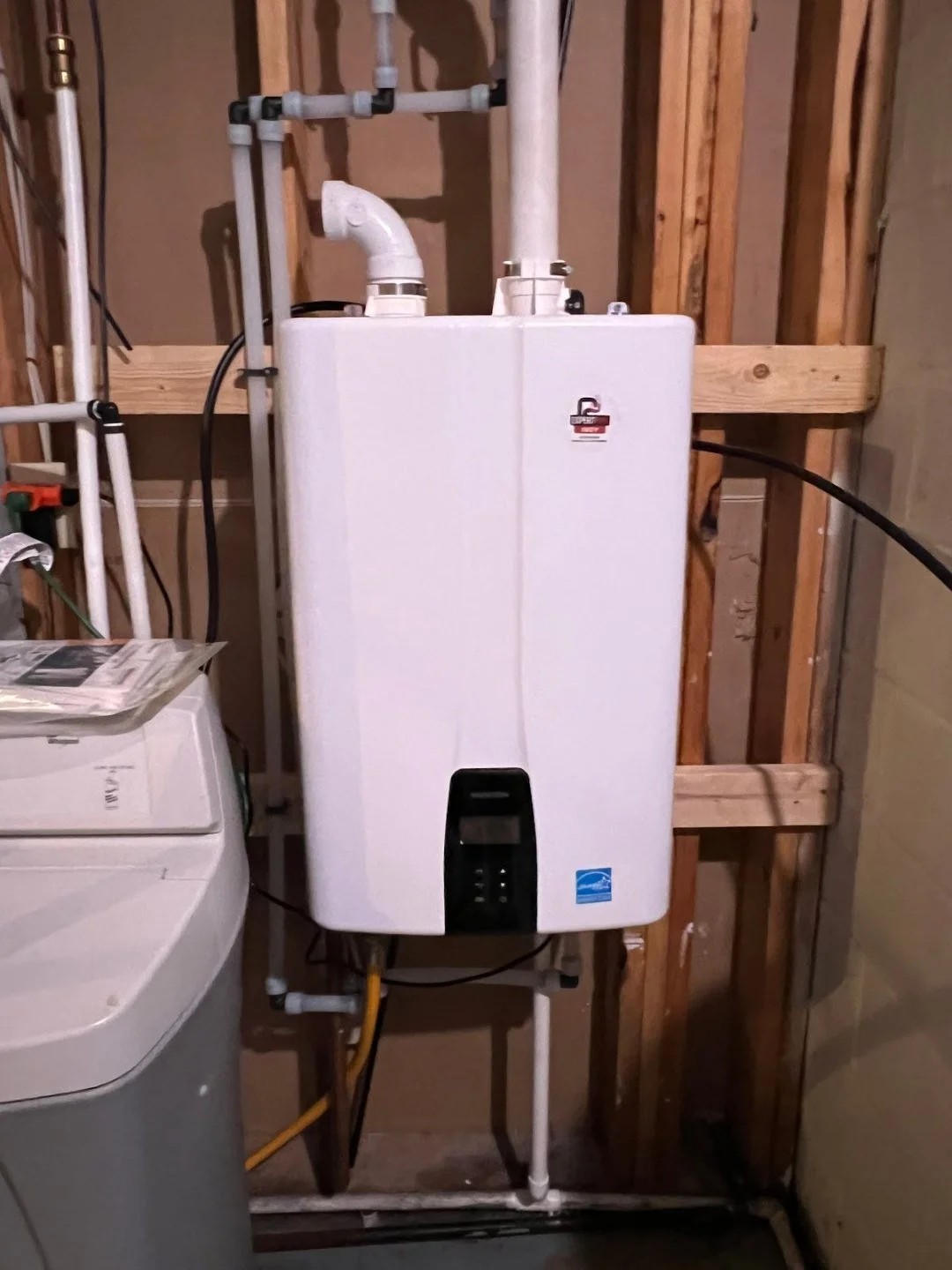
How a tankless heater works
A tank heater keeps 40 to 80 gallons hot around the clock. A tankless unit stores nothing. When you open a hot tap, water flows through a heat exchanger and a gas burner heats it on the spot. Close the tap and it shuts off. We install Navien gas tankless units, which use electronic ignition with no standing pilot.
What homeowners like about them
Hot water that keeps going. Back-to-back showers, a filled tub and a load of laundry do not drain anything, as long as the unit is sized for your use.
Space back. A wall-mounted unit frees up floor space in a basement, closet or garage. That matters when you are finishing a basement in Carmel or Westfield.
Lower standby energy use. There is no tank to keep hot while everyone is asleep or at work.
Longer life. With regular descaling, tankless units often last 15 to 20 years, and many parts can be replaced instead of the whole unit.
What to plan for
Hard water
This is the big one in Hamilton County and the Indianapolis area. Scale builds up inside the heat exchanger, and a tankless unit in hard water needs to be descaled on a regular schedule. Pairing it with a water softener makes a real difference. Homes on well water in outlying areas often have even harder water, so we check that first.
Gas line and venting
A tankless unit uses a lot of gas while it runs, so the gas line often needs to be larger than what fed the old tank. It also needs its own venting, usually PVC run through a sidewall or the roof, and a condensate drain. We check all of this on the first visit.
Older homes in North Indianapolis neighborhoods like Meridian Hills, Nora and Broad Ripple are more likely to need a larger gas line from the meter. Newer homes in Carmel, Fishers and Westfield are often easier to convert because the mechanical room is roomy and gas service is modern.
Flow limits
Tankless does not run out, but it has a maximum flow rate. The unit has to be sized for how many fixtures you run at once and for our cold winter groundwater. A properly sized unit handles several fixtures at a time.
Up-front investment
A tankless install is a bigger project than a tank swap. Right now we offer $500 off any tankless water heater installation, and your plumber gives you options and a price for tank and tankless side by side before any work starts.
A short wait for hot water
Tankless does not make hot water appear at the tap faster. Water still has to travel through your pipes. Many Navien models offer built-in recirculation options that cut that wait.
Who gets the most out of tankless
Busy households that run out of hot water with a tank
Homes with a large soaking tub or several full baths
Owners planning to stay in the home for years
Anyone finishing a basement who wants the floor space
Homes already on a water softener, or willing to add one
When a tank is the better call
One or two people with light hot water use
Plans to sell in the near future
A gas line or venting route that would take major work to upgrade
No interest in periodic descaling
A new Bradford White tank is a solid, dependable choice, and we currently take $50 off any tank water heater installation. Offers cannot be combined with our 10% price match.
What a tankless install looks like
We check gas supply, venting route, water quality and your hot water needs.
We drain and remove the old tank and haul it away.
We mount the unit with isolation valves for future descaling.
We connect water, gas, venting and the condensate drain, and pull the permit.
We fire it up, test it and show you how it works.
When to call us
If you are weighing tank versus tankless, or your current heater is near the end, call or text us for a visit. See our water heater repair and replacement page for more on what we install.
FAQ
Can a tankless heater go where my old tank was?
Often, yes. The unit mounts on a nearby wall, and we route venting and gas to it. We confirm the location works before you commit.
How often does a tankless unit need maintenance?
In our hard water, plan on descaling it on a regular schedule, commonly once a year, and cleaning the inlet filter. With a softener, it can stay cleaner longer.
Will I need a bigger gas line?
Many homes do, because tankless units draw more gas while running than a tank burner. We measure the existing line and your other gas appliances to find out.
What happens during a power outage?
Gas tankless units need electricity for their controls and fan, so they will not heat water without power. A tank with a standing pilot can keep supplying some hot water during an outage.
How do you size a tank versus a tankless unit?
A tank is sized by its first-hour rating, which tells you how much hot water it can deliver in a busy hour. That number matters more than the gallons on the label. A tankless unit is sized by flow rate: how many showers, faucets and appliances you want to run at the same time.
Can you replace an old tankless unit?
Yes. If you have an older tankless heater that is failing, we can repair it when that makes sense or replace it with a new Navien unit.
Does tankless add value to a home?
Many buyers see it as a plus, especially with the space savings. The bigger benefit usually goes to the owner who lives with the endless hot water for years.
Curious if tankless fits your home? Call or text (317) 731-3028, or see our recent work.

Water Heater Repair vs. Replacement: How to Know Which Makes Sense
When a water heater acts up, the big question is whether it needs a part or a whole new unit. Plenty of problems are straightforward repairs. Others mean the tank has run its course. Here is how we sort it out for homeowners in Indianapolis and across Hamilton County.
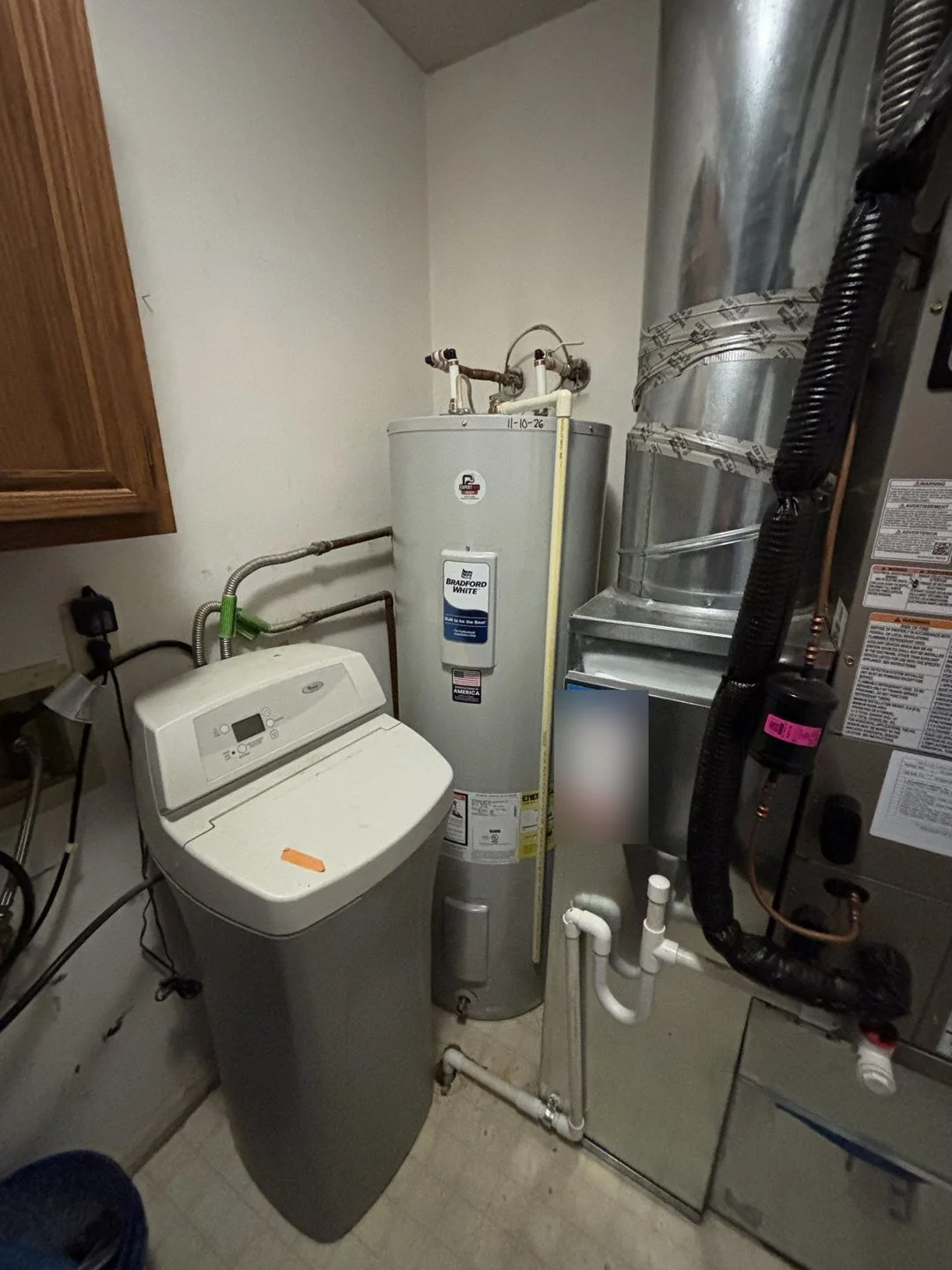
Our approach: repair first when it makes sense
If a safe, lasting repair will get your heater back to work, that is what we recommend. We suggest replacement only when it is the better value for you, and we explain exactly why, whether it is the tank's age, its condition or a safety concern. Either way, your plumber gives you options and a price before any work starts.
Symptoms that usually point to a repair
No hot water, or not enough
On electric heaters this is often a heating element or thermostat. On gas heaters, a thermocouple, a dirty burner or a pilot issue is common. A broken dip tube can cause fast-fading hot water on either type. All of these are fixable parts.
A pilot that keeps going out
Usually a thermocouple, a clogged pilot or a draft. Routine repairs on a heater that is otherwise sound.
Rumbling or popping
That is sediment from our hard water cooking on the bottom of the tank. A flush and a check of the anode rod often quiet it down, especially on a younger heater that has not been maintained.
A drip from a valve or fitting
Leaks from the drain valve, the relief valve or the pipe connections above the tank are repairs. The relief valve may also be telling you house pressure is too high or an expansion tank has failed.
Symptoms that usually point to replacement
Water seeping from the bottom of the tank. Once the tank itself leaks, it cannot be repaired.
Rusty hot water that does not clear, when the cold water is fine. That usually means the inside of the tank is corroding.
Heavy rust on the base, burner area or fittings.
Repeated breakdowns on an older heater, where one repair leads to the next.
A heater that no longer fits your household, such as after adding a bathroom or more people.
How age fits in
Age is not the whole story, but it shifts the math. As a general guide:
Under about 8 years: repairs almost always make sense, and parts may still be under the manufacturer warranty.
About 8 to 12 years: a minor repair is often worth doing, but it is a good time to start planning.
Past 12 years: a major repair is harder to justify, especially with signs of corrosion.
Hard water across Hamilton County can age a tank faster if it has never been flushed. Tankless units tend to last longer and are often worth repairing further into their life.
To find your heater's age, look at the serial number on the label. The manufacture date is coded into it, and formats vary by brand. Text us a photo and we will read it for you.
Questions to ask before you decide
Is the tank itself sound, with no leaks or heavy rust?
How many repairs has it needed in the last couple of years?
Does it still keep up with how your household uses hot water?
Would a replacement also fix code items like a missing expansion tank or venting issues?
Are you planning to stay in the home long enough to consider tankless?
When to call us
If your water heater is leaking, noisy, short on hot water or just getting old, call or text for a diagnosis. If it can be fixed, we will fix it. If replacement is the better value, we install Bradford White tanks and Navien tankless units, often the same day, with the permit and haul-away handled. Current offers are $50 off any tank water heater installation and $500 off any tankless installation. Learn more on our water heater repair and replacement page.
FAQ
How do I know if my water heater can be repaired?
If the tank is not leaking and the problem is a part like an element, thermostat, thermocouple or valve, it can usually be repaired. Your plumber will test the parts and tell you what they found.
Is it worth fixing a 10 year old water heater?
For a small repair on a tank that is dry and in good shape, often yes. If it also shows rust or has needed several repairs, replacement may be the better use of your money.
Can a leaking tank be patched?
No. Heat and pressure make patches unreliable, and a failing tank can let go suddenly. A leak from a valve or fitting is different and can be repaired.
Can I go bigger or switch to tankless when I replace?
Yes, as long as the space, gas or electric supply and venting can support it. We will check those and price each option so you can compare.
How fast can you replace mine if it fails?
Same-day replacement is often available. Call rather than text if water is actively leaking so we can help you shut things off while we are on the way.
Repair or replace? Call or text (317) 731-3028, or see our 10% price match.

Water Heater Leaking in Carmel? What to Do Before It Floods
You walk into the basement or utility closet and find a puddle under the water heater. It might be a slow drip or a steady trickle, but either way it needs attention today. Here's what to do in the first few minutes, how to tell where the water is coming from, and how to know whether you're looking at a simple fix or a new heater.
Step one: make it safe and stop the water
Before you grab a mop, cut off the energy and the water supply to the tank.
Electric heater: switch off the water heater breaker at your panel. Don't touch the tank or its wiring while you're standing in water with the power on.
Gas heater: turn the gas control knob on the heater to OFF, or close the gas valve on the line feeding it (the handle turns crosswise to the pipe). If you smell gas, leave the house and call your gas utility or 911 from outside.
Water: close the cold water valve on the pipe going into the top of the tank. If you can't find it or it won't turn, shut off the main water valve for the house.
If the leak is heavy, connect a garden hose to the drain valve near the bottom and run it to a floor drain or outside to empty the tank. The water can be scalding, so let it cool first if you can.
Find where the water is coming from
Where the leak starts tells you most of what you need to know. Dry the area with a towel and watch for a few minutes.
Top of the tank
Water up top usually comes from the cold inlet or hot outlet connections, a worn flex connector, or a corroded fitting where copper meets the steel tank. These are almost always repairable.
The relief valve on the side
The temperature and pressure (T&P) relief valve is a safety device that opens when pressure or temperature in the tank gets too high. If it drips or the pipe coming off it is wet, the valve may be worn out, or your household water pressure may be spiking as the heater warms up. A new valve, a pressure-reducing valve or a thermal expansion tank usually solves it. Never cap or plug that discharge pipe.
Drain valve at the bottom
The drain valve can loosen, get left slightly open after a flush, or crack if it's plastic. A drip right at the valve is usually a quick swap.
Under the tank or through the jacket
If water is seeping from under the tank itself, from a seam, or through the insulation with no fitting above it, the inner tank has usually rusted through. That can't be patched. The only real fix is a new water heater.
Not actually the heater
Sometimes the puddle comes from somewhere else: condensation on cold lines in a humid basement, a nearby softener, a furnace condensate line, or a floor drain backing up. It's worth a look before assuming the worst.
Repair or replace?
We start from repair. If the tank is sound and the leak is from a valve, fitting or connector, we fix it and you keep your heater. Replacement makes more sense when:
The tank body itself is leaking.
The heater is near the end of its life and has other problems like rusty water, rumbling or short hot water.
The repair would cost close to a new heater, or wouldn't last.
Your plumber will show you what they found and give you options and a price before any work starts. If replacement is the better value, we install Bradford White tank heaters and Navien tankless units, handle the permit and haul the old one away. Same-day replacement is often available.
Why tanks wear out early around here
Hard water is the big one in Hamilton County. Minerals settle to the bottom of the tank as sediment, which makes the burner or elements work harder and wears on the steel. The anode rod, a metal rod inside that corrodes so the tank doesn't, gets used up faster too. High or spiking water pressure adds stress to fittings and the relief valve.
A few habits help a tank last:
Flush a few gallons from the drain valve once a year to clear sediment.
Have the anode rod checked every few years, especially if you don't have a softener.
Consider a water softener if you see scale on fixtures or crusty faucet aerators.
Set an inexpensive leak alarm on the floor next to the heater.
Keep the area around the heater clear so you notice a drip early.
Don't let a slow drip sit
A small leak rarely stays small. Water wicks into drywall, carpet and subfloor, and mold can start within a day or two. A tank weeping from the bottom can also let go all at once and empty onto the floor. Finished basements in Carmel and Westfield make that especially painful. Getting it looked at early usually keeps the fix simple.
When to call us
Call if water is coming from the tank itself, if the relief valve keeps discharging, or if you've shut things off and aren't sure what you're looking at. If you'd rather start with a text, send a photo of the leak and the label on the heater and we can often tell you what's going on. Our water heater repair and replacement page has more, and if water is spreading fast, see our emergency plumbing page.
FAQ
Is a leaking water heater dangerous?
The water is mostly a damage risk, but electricity and gas near a wet floor are real hazards. Shut off the breaker or gas control first. If you smell gas at any point, get everyone out and call your gas utility or 911.
Can a leaking tank be patched?
No. Once the inner steel tank rusts through, any patch will fail. Leaks from valves, fittings and connectors are a different story and can usually be repaired the same day.
My heater is fairly new. Why is it leaking?
Newer heaters most often leak at a connection, the drain valve or the relief valve, and those are repairable. Hard water and high pressure can shorten a tank's life, so it's worth checking your water pressure and whether an expansion tank is needed.
Can the heater wait until you get here?
If it's a small drip from a fitting, it can usually wait with the power or gas off and the cold supply closed. If water is coming from the tank body, leave it shut down. Text us a photo and we'll tell you how urgent it is.
How quickly can you replace it?
Same-day replacement is often available. We bring the new heater, handle the permit and take the old one with us. We also offer $50 off any tank water heater installation and $500 off any tankless installation.
Water heater leaking? Call or text (317) 731-3028, or visit our Carmel water heater service page.

Water Heater Installation in Carmel: A Homeowner's Guide
Most people replace a water heater once or twice while they own a home, usually right after a cold shower. That makes it hard to know what to ask for. This guide covers the choices you'll face and what a good installation looks like, so you can make the call with confidence.
Signs your water heater is near the end
Tank water heaters in Central Indiana tend to wear out sooner than the box suggests, mostly because of hard water. Start planning a replacement if you notice:
Water pooling under the tank or rust stains on the base
Rusty or discolored hot water
Popping or rumbling as the heater runs, a sign of heavy sediment
Hot water running out sooner than it used to
A tank that's past the ten-year mark
Not sure how old yours is? The manufacture date is coded into the serial number on the label. Text a photo of the label to (317) 731-3028 and we'll tell you.
Tank, tankless, gas or electric
Tank water heaters
A tank keeps a supply of hot water ready to go. It's the simplest swap if you already have one, and it fits most Carmel and Fishers basements and utility closets without changes. We install Bradford White tank heaters, which hold up well in hard water.
Tankless water heaters
A tankless unit heats water as you use it, so you don't run out during back-to-back showers. It mounts on the wall and frees up floor space. The trade-off is that switching often means a larger gas line, new venting and a condensate drain. We install Navien tankless units and will tell you honestly whether your home is a good fit.
Gas or electric
If your home has natural gas, a gas heater recovers faster and is usually the better choice for a busy household. Many homes, especially some newer subdivisions and outlying areas, are all-electric, and a properly sized electric tank works well there. Staying with the fuel you have keeps the job simpler.
Getting the size right
A heater that's too small runs out of hot water. One that's too big wastes energy keeping water hot you never use. Your plumber will ask a few questions:
How many people live in the home and how often showers overlap
Whether you have a large soaking tub or body sprays
How many bathrooms are used at the same time in the morning
For tankless, sizing is about flow rate, meaning how many fixtures run at once, rather than gallons stored.
What a proper installation includes
A new heater is only as good as the way it's connected. On an ExpertPipe Indy install, your plumber:
Shuts off the gas or power and water, drains the old tank and removes it
Sets the new heater and connects new water lines, using dielectric fittings where copper meets steel to slow corrosion
Installs or checks the thermal expansion tank, which protects the heater and fittings from pressure spikes
Pipes the temperature and pressure relief valve to a safe discharge point
Checks gas connections and venting on gas units so exhaust leaves the home properly
Fills, tests every joint for leaks and confirms hot water at the taps
Handles the permit and hauls the old heater away
Same-day replacement is often available for tank heaters. Tankless conversions take more planning because of the gas and venting work.
What affects the cost of installation
Every home is a little different, so we don't quote a one-size-fits-all number. What changes the job:
Tank or tankless, and gas or electric
Size of the unit
Where it sits, such as an open basement versus a tight closet or attic
Whether venting, gas line or electrical needs updating to meet current code
Whether an expansion tank or new shutoff valves are needed
Your plumber looks at the setup, gives you options and a price before any work starts, and nothing begins until you approve it. We also offer $50 off any tank water heater installation and $500 off any tankless installation.
Making the new one last
Flush a few gallons from the drain valve once a year to clear sediment.
Have the anode rod checked every few years, especially without a softener.
Keep paint, gas cans and cleaning chemicals away from a gas heater.
For tankless units, plan on descaling once a year in hard water areas.
A water softener is one of the best ways to protect any water heater in Hamilton County.
When to call us
Call or text if your heater is leaking, making noise, or getting close to its age limit and you'd like to replace it on your schedule instead of in an emergency. Our water heater repair and replacement page has more on the brands and services we offer. In Carmel, see our water heater replacement in Carmel page for local details.
FAQ
How long does a water heater installation take?
A straight tank-for-tank swap usually takes a few hours. A tankless conversion takes longer, since gas lines, venting and a condensate drain often need work. Your plumber will give you a time estimate along with the price.
Do I need a permit to replace a water heater?
Yes, water heater replacement typically requires a permit. We handle it as part of the job, so you don't need to contact the city or county yourself.
Should I repair my old heater or replace it?
If the tank is sound and the problem is a valve, element, thermostat or connection, repair is often the smart move. If the tank itself is leaking or the heater is old and failing in several ways, replacement is the better value. We'll explain which applies to yours.
Is tankless worth it for my home?
Tankless is a great fit for larger households, homes with big tubs, or anyone who wants the floor space back. If you have a small household and a tank that's working well, a new tank may serve you just as well. We'll go over both options on site.
Will you take the old water heater?
Yes. Haul-away of the old unit is part of every replacement.
Ready for a new water heater? Call or text (317) 731-3028, or request service online.

Whole-Home Repiping in Meridian Hills and North Indy
Old galvanized or failing copper pipes in Meridian Hills, Nora or Broad Ripple? Signs it's time to repipe, material choices, and how the job gets planned.
Meridian Hills is full of well-built older homes on big, tree-shaded lots. Many of them still have the water pipes they were built with, and after enough decades those pipes start to show it. If you're patching leak after leak or living with weak, rusty-looking water, a repipe may be the fix that finally ends it.
Why older North Indy homes need repiping
Homes around Meridian Hills, Nora, Broad Ripple and Williams Creek (46240, 46260, 46228 and 46208) span several building eras, and each came with its own piping:
Galvanized steel. Common in older homes. It rusts from the inside, so the opening narrows over time. The result is low pressure, especially on upper floors, and brown or orange water after the lines sit.
Older copper. Copper lasts a long time, but decades of hard water and high pressure can cause pinhole leaks, often one after another.
Polybutylene. This gray plastic pipe was installed in many homes from the late 1970s into the 1990s. It's known for failing without warning at fittings.
Mixed repairs. Plenty of homes have a patchwork of all three, with transitions that corrode where different metals meet.
Signs it's time to repipe
You've had more than one leak in the past year or two
Low water pressure throughout the house, not just at one faucet
Discolored water, especially first thing in the morning
Visible rust, green crust or flaking on exposed pipes in the basement
Pressure drops when a second fixture turns on
You're planning a kitchen or bath remodel and walls will already be open
One leak doesn't always mean a whole-home repipe. If most of your plumbing is in good shape and one section is failing, replacing that section can be the right call. We'll tell you which situation you're in and why.
Choosing the new pipe
PEX
PEX is flexible plastic tubing that resists scale and corrosion. Because it bends, it can be fished through walls and ceilings with fewer openings, which matters in finished older homes with plaster. It's the most common choice for repiping today.
Copper
Copper is proven and durable, and some homeowners simply prefer it. It takes more labor to run through finished spaces, but it's a solid option where access is easy, such as an open basement ceiling.
Your plumber will talk through both and recommend what fits your house. Many repipes use a mix, with copper at exposed connections and PEX in the walls.
How a repipe is planned
A good repipe starts with a walk-through. Your plumber looks at where the main comes in, how water travels to each bathroom and the kitchen, and where the lines can be routed with the least disruption. The goals are to:
Run new lines by the most direct, accessible paths
Add shutoff valves at fixtures so future repairs are easy
Keep your water off for as short a time as possible each day
Protect floors and furnishings while work is underway
Before any work starts, you'll know which fixtures are being reconnected, where openings will be made and what order the work will follow.
What affects the cost of a repipe
Repiping is priced to the house, so every job is a little different. The main factors are:
Size of the home and number of bathrooms and fixtures
Whether the basement ceiling is open or finished
Plaster or drywall, and how much access the walls allow
Pipe material
Whether the main water line into the house should be replaced at the same time
Your plumber gives you options and a price before any work begins. If you already have a written estimate from another licensed plumber for the same scope, our 10% price match will beat it by 10%. Every repipe is backed by our 12-month workmanship warranty.
When to call us
Call or text if you're seeing repeated leaks, rusty water or low pressure, or if you're about to remodel and want the plumbing updated while walls are open. You can read more on our whole-home repiping page or see our North Indianapolis service area.
FAQ
How do I know if my home has galvanized pipe?
Look at exposed pipe near the water heater or where the main comes in. Galvanized pipe is dull gray and threaded at the joints. If a magnet sticks to it, it's steel. Send us a photo and we'll confirm.
Do I have to repipe the whole house at once?
Not always. If the problems are limited to one area and the rest of the system is sound, a partial repipe can make sense. If the whole house is galvanized, replacing it all at once is usually the better long-term value.
Can I stay in my home during a repipe?
Yes, most families do. Water is shut off for stretches while connections are made, and your plumber will let you know when to expect those so you can plan around them.
Will repiping fix my low water pressure?
If the cause is narrowed galvanized pipe, a repipe usually makes a big difference. Pressure problems can also come from a failing pressure-reducing valve or the main water line, so your plumber will check those first.
Is PEX safe for drinking water?
Yes. PEX used for home water lines is rated for drinking water and is approved under plumbing code. It's used in most new homes built around Central Indiana today.
Thinking about a repipe? Call or text (317) 731-3028, or visit our repiping page.

Ceiling Leak Repair and Leak Detection in Meridian Hills
Water stain on the ceiling in Meridian Hills, Nora or Broad Ripple? What to do first, where ceiling leaks usually start, and how the source gets tracked down.
A brown ring on the ceiling is easy to ignore until it grows or starts to sag. In older Meridian Hills homes with bathrooms stacked over living spaces, it's one of the most common calls we get. Here's how to handle it and what usually turns out to be behind it.
What to do when you spot a ceiling leak
Figure out what's above it. A bathroom, laundry room, kitchen or water heater closet directly overhead is the likely source.
Stop using that fixture. If the stain only grows after showers or loads of laundry, that's a strong clue, and resting it slows the damage.
Shut off the water if it's actively dripping. Close the valve at the fixture or the main shutoff for the house.
Protect what's below. Move furniture and put down a bucket or towels.
Watch for sagging. A bulging spot means water is pooling on the drywall. Keep people out from underneath and turn off lights or fans on that circuit if water is near a fixture.
Take photos. They help your plumber and your insurance company.
Where ceiling leaks usually come from
Showers and tubs
Failed grout or caulk, a loose drain gasket, or a leaking shower valve behind the wall can all send water down through the floor. These leaks often show up only when the shower is running.
Toilets
A worn wax ring lets a little water out at each flush. It soaks the subfloor slowly and often shows as a stain directly below the toilet.
Supply lines
Pinhole leaks in older copper, corroded galvanized fittings and worn braided connectors under sinks leak all the time, not just during use. A stain that stays wet or keeps spreading points this way.
Drain lines
Many older North Indy homes still have cast iron drains. Over time they can crack or rust through at joints, and a leak shows up whenever water runs down the line.
Appliances
Upstairs washers, refrigerator ice-maker lines and second-floor water heaters are frequent sources in newer layouts too.
How the source gets tracked down
Water travels along joists and pipes before it drips, so the stain isn't always right below the leak. A good diagnosis narrows it down step by step instead of opening big holes on a guess:
Running each fixture above the stain one at a time to see which one makes it worse
Checking the water meter with everything off to see if a supply line is leaking under pressure
Checking moisture levels across the ceiling to map the wet area
Making one small, targeted opening where the evidence points
Once the leak is found, it's repaired to code and tested before anything is closed back up.
Why hidden leaks show up in older homes
Homes in Meridian Hills, Nora and Broad Ripple (46240, 46260, 46228 and 46208) often have decades-old copper, galvanized supply lines and cast iron drains. Hard water, pressure swings and cold Indiana winters all add wear. One pinhole leak can be a sign that others are coming, so your plumber will let you know if the rest of the piping nearby looks tired and whether a repipe is worth considering.
Signs of a leak you can't see yet
Stains, bubbling paint or soft drywall
A musty smell in one room
A water bill that jumps without explanation
The meter moving when every fixture is off
Warped flooring near a bathroom or laundry
When to call us
Call as soon as you see a new stain, especially if it's spreading or soft to the touch. Your plumber will find the source, explain the repair and give you options and a price before any work begins. If you already have a written estimate from another licensed plumber, our 10% price match beats it by 10%. Learn more on our leak detection and repair page.
FAQ
Is a small ceiling stain really urgent?
It's worth dealing with soon. Even a slow leak keeps soaking drywall, insulation and framing, and mold can start growing within a couple of days. The earlier it's found, the smaller the repair usually is.
Why does the stain only get worse after a shower?
That usually points to the shower drain, the grout and caulk, or the valve behind the wall rather than a pressurized supply line. Your plumber can test each part separately to find which one it is.
Do you have to cut open my ceiling?
Often a small opening is needed to reach the pipe and make a proper repair. The goal is to keep it as small as possible by narrowing down the source first.
Will my homeowners insurance cover it?
Many policies cover sudden water damage but not slow, long-term leaks. Take photos, call your agent early, and keep the repair paperwork. We're happy to explain what we found so you can share it with your insurer.
Can a leak come from the roof instead of plumbing?
Yes. If the stain appears after rain and there's no plumbing above it, it may be the roof, flashing or a window. If the leak shows up regardless of weather or right after water use, it's more likely plumbing.
Seeing a new ceiling stain? Call or text (317) 731-3028, or visit our leak detection page.

Sewer Line Replacement in Meridian Hills and North Indy
Backups, roots or a failing clay sewer line in Meridian Hills or North Indianapolis? Warning signs, how a camera inspection helps, and when to replace.
The big oaks and maples in Meridian Hills are a large part of what makes the neighborhood special. They're also one of the main reasons older sewer lines fail. If drains all over the house are slowing down or the basement floor drain is backing up, the sewer line between your home and the city main is the first place to look.
Why sewer lines fail in older North Indy neighborhoods
Many homes in Meridian Hills, Nora and Broad Ripple (46240, 46260, 46228 and 46208) were built with sewer pipe that has now been in the ground a long time:
Clay tile. Laid in short sections with many joints. Roots find their way into those joints, grow and eventually crack or shift the pipe.
Cast iron. Strong, but it rusts from the inside, scales up and can crack or rot through at the bottom of the pipe.
Orangeburg. A fiber pipe used in some mid-century homes that can soften and flatten over time.
Add Indiana's freeze-thaw cycles, settling soil and decades of use, and a line can sag, separate at joints or partly collapse.
Warning signs of a failing sewer line
Several drains slow or back up at the same time
Water comes up in the basement floor drain or lowest shower when you run the washer or flush
Gurgling from toilets or drains
Sewer smell in the basement or yard
A soggy or unusually green strip of lawn along the line
You need the main line cleared again and again
One backup doesn't mean you need a new line. Plenty of clogs are just clogs, and a good drain cleaning takes care of them.
Start with a camera inspection
A sewer camera shows exactly what's going on inside the pipe: roots, cracks, offset joints, bellies where the line sags and holds water, or a collapsed section. It also shows where the problem is and how deep, which shapes the whole plan.
From there, your plumber can tell you whether:
Clearing the line and managing roots will keep it working
One damaged section can be dug up and replaced
The line is failing along its length and full replacement is the better value
We start from repair. Replacement is recommended when the pipe itself is broken down and cleaning or spot repairs won't hold, and we'll show you the footage so you can see why.
What sewer line replacement involves
Sewer replacement at ExpertPipe Indy is done by excavation. Shawn runs our excavation and sewer crew, and a typical job looks like this:
Utilities are marked through Indiana 811 before any digging
The crew excavates along the line or at the damaged section
The old pipe comes out and new PVC sewer pipe goes in at proper slope, with a cleanout for easy access later
The new line is connected at the house and toward the city sewer, inspected and tested
The trench is backfilled and the site is cleaned up
Your plumber will talk you through what to expect with your yard, driveway or landscaping before the work is scheduled.
What affects the cost of sewer replacement
How long the line is and how deep it runs
Whether only a section or the full line needs replacing
What's on top of it: lawn, landscaping, a driveway or a sidewalk
Tree roots and soil conditions along the route
Permit and inspection requirements
Your plumber gives you options and a price before any work begins. If you already have a written estimate from another licensed plumber for the same scope, our 10% price match beats it by 10%. Every job carries our 12-month workmanship warranty.
When to call us
Call or text if more than one drain is backing up, you see water at the floor drain, or you keep needing the main line cleared. Learn more on our sewer line repair page.
FAQ
Who is responsible for the sewer line?
In most of Indianapolis, the homeowner is responsible for the sewer line from the house out to where it connects to the public sewer. The city or utility maintains the main itself. If you're unsure where your line ties in, a camera inspection can help locate it.
Can roots be cleared without replacing the line?
Often, yes. If the pipe is structurally sound, cutting out roots and keeping up with regular cleaning can keep it working for years. If roots have cracked or shifted the pipe, they'll keep coming back until that section is replaced.
Do you offer trenchless sewer replacement?
No. We replace sewer lines by excavation, which lets our crew see and fix the entire problem directly. We plan the dig to limit disruption to your yard as much as possible.
How long does a sewer line replacement take?
It depends on the length and depth of the line and what's on top of it. Your plumber will give you a timeline along with the price so you can plan around it.
What should I do if sewage is backing up right now?
Stop running water, flushing toilets and using the washer or dishwasher, then call us. Keep kids and pets away from any backed-up water.
Seeing sewer trouble? Call or text (317) 731-3028, or visit our sewer line repair page.

Sump Pump Installation in Meridian Hills and North Indy
Keep your Meridian Hills basement dry. Sump pump types, why a battery backup matters, signs a pump is failing, and simple checks to do before storm season.
In a lot of Meridian Hills homes, the sump pump is the only thing standing between a spring storm and a wet basement. It sits out of sight doing its job until the day it doesn't. A little attention now, and the right setup, keeps that day from arriving during a downpour.
Why sump pumps work so hard around here
Central Indiana gets heavy spring rains, fast snowmelt and the occasional stretch of storms that knocks the power out. Homes in Meridian Hills, Nora and Broad Ripple (46240, 46260, 46228 and 46208) often sit on heavy soil that holds water, so groundwater collects around the foundation and drains into the sump pit. When the pit fills, the pump pushes that water out and away from the house. If it can't keep up or doesn't turn on, the basement takes the water instead.
Types of sump pumps
Submersible pumps
The whole pump sits inside the pit. They're quiet, handle larger volumes of water well and are the most common choice for finished basements.
Pedestal pumps
The motor sits on a column above the pit and stays dry. They're easy to reach for service and work well in narrow pits.
Battery backup systems
A second pump runs on a battery if the main pump fails or the power goes out. Since the worst storms are often the ones that cut power, a backup is one of the best upgrades you can make to a finished basement.
Combination systems
A primary pump and a backup pump installed together in the same pit, often with an alarm that tells you when the backup is running.
What a good installation includes
The pump is only one part of the system. A solid install also covers:
A check valve so water in the discharge pipe doesn't fall back into the pit each time the pump shuts off
A properly routed discharge line that sends water well away from the foundation, not back toward it
Freeze protection on the outdoor discharge so an Indiana winter doesn't block it with ice
A lid on the pit to keep debris out and reduce moisture in the basement
A dedicated outlet for the pump so another appliance can't trip it
A high-water alarm so you know about a problem before the floor gets wet
Signs your sump pump needs attention
It runs constantly, or turns on and off every few seconds
Grinding, rattling or humming without pumping
Rust, corrosion or a stuck float switch
Water in the basement even though the pump is running
The pump is getting older and you can't remember when it was installed
Pumps are much easier to replace on a dry afternoon than in the middle of a storm.
A two-minute test you can do yourself
Make sure the pump is plugged in and the outlet has power.
Slowly pour a bucket of water into the pit until the float rises.
The pump should kick on, empty the pit and shut off on its own.
Head outside and confirm water is coming out of the discharge.
Try this in early spring and again before fall storms. If you have a battery backup, check the battery age and test it too.
What affects the cost of a sump pump install
Pump type and capacity
Whether you're adding a battery backup or alarm
The condition of the existing pit, check valve and discharge line
How far and where the water needs to be discharged
Whether electrical work is needed for a dedicated outlet
Your plumber gives you options and a price before any work begins. If you already have a written estimate from another licensed plumber for the same work, our 10% price match beats it by 10%.
When to call us
Call or text if your pump failed your bucket test, is running nonstop, or you'd like a battery backup added before the next storm season. If the basement is taking on water right now, call instead of texting so we can help you limit the damage. More details are on our sump pump installation and repair page.
FAQ
How long does a sump pump last?
It depends on how often it runs and the quality of the pump. A pump that cycles constantly in a wet basement wears out faster than one that rarely turns on. If yours is getting up there in age, replacing it on your schedule is safer than waiting for it to fail.
Do I really need a battery backup?
If your basement is finished or you store anything valuable down there, it's well worth it. Power outages and heavy rain often arrive together, and a backup keeps pumping when the main pump can't.
Why does my sump pump run when it hasn't rained?
Groundwater can keep flowing into the pit for days after rain or snowmelt. It can also mean the check valve is failing and letting water fall back into the pit, or the float is set too low.
Where should the discharge water go?
Away from the foundation, to a spot where it drains off without flowing back toward the house or onto a neighbor's property. Local rules may limit where you can discharge, so your plumber will help you choose the right spot.
Can you add a backup to my existing pump?
Usually, yes, as long as the pit has room and the current pump is in good shape. Your plumber will check both and tell you whether adding a backup or replacing the whole setup makes more sense.
Protect your basement before the next storm. Call or text (317) 731-3028, or visit our sump pump page.
